
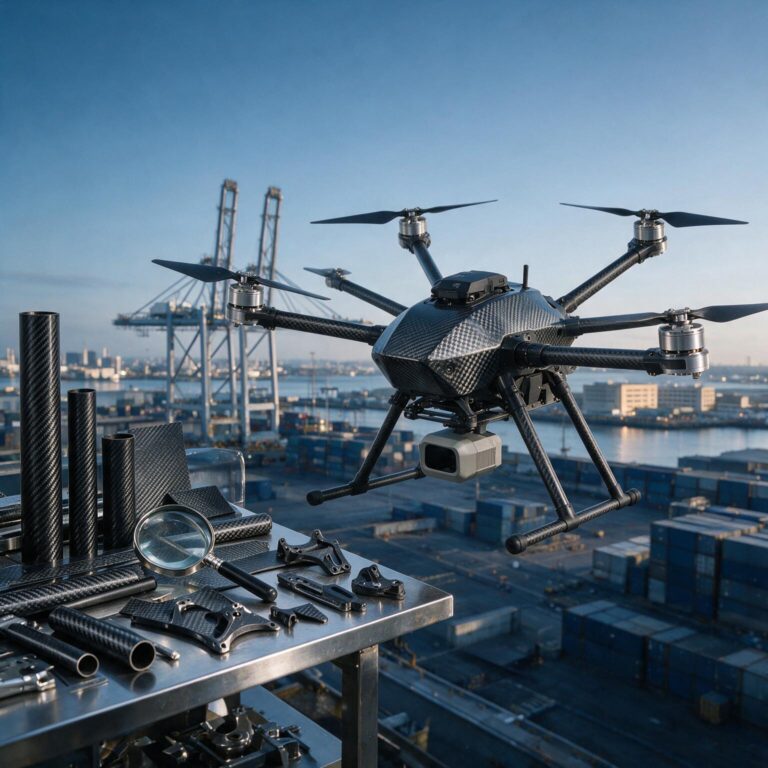
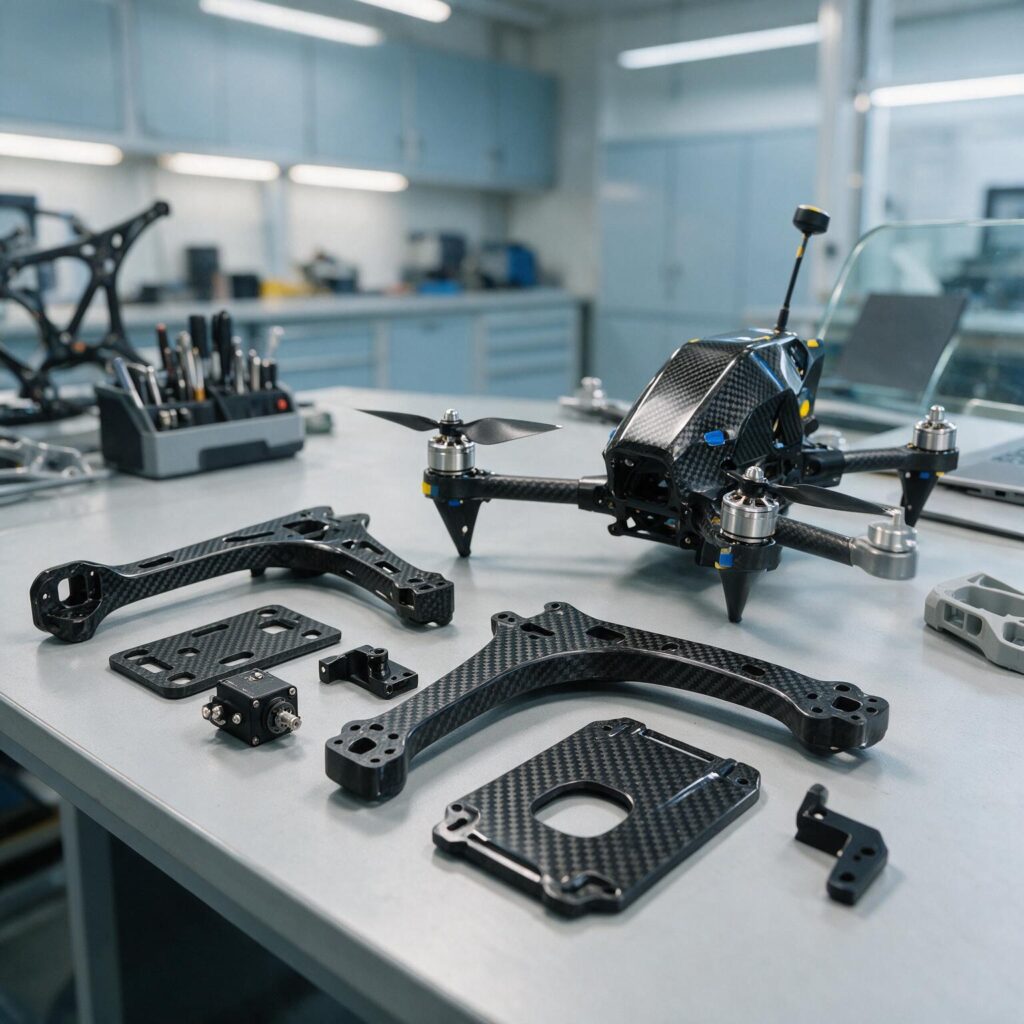
A lighter airframe doesn't just mean better endurance on the same battery. It means you can specify a smaller battery for the same endurance and save further weight, creating a positive spiral. Or you can reinvest the weight savings in payload capacity on a heavier camera, a sensor array, a spray tank with more capacity. On a 1 kg platform, saving 80 grams of structural weight is meaningful. On a 5 kg platform, saving 300 grams is the difference between a competitive product and one that can't match the field.
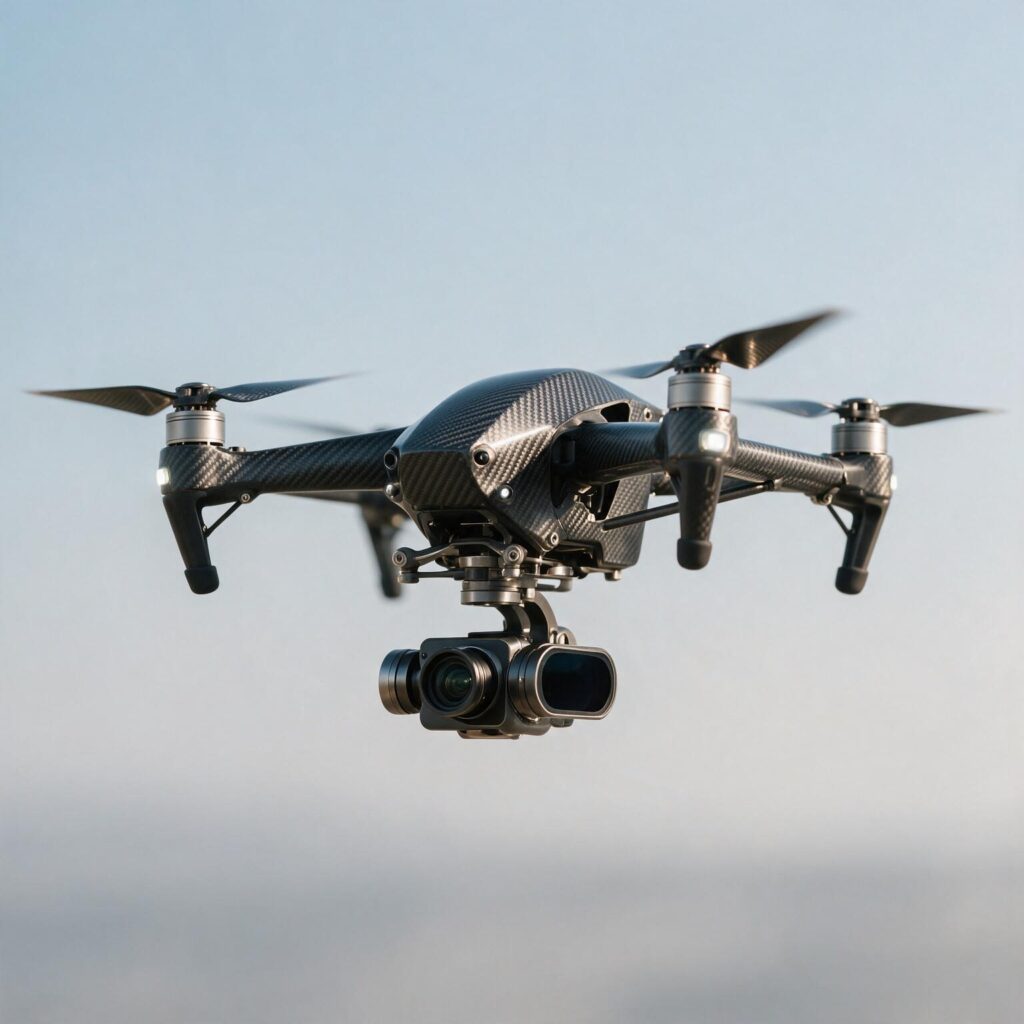
Motor vibration is a real engineering problem in multirotors. Vibration that travels through the frame corrupts IMU readings, blurs camera footage, and accelerates fatigue in mounting hardware. Carbon fiber arms and frames damp vibration differently from aluminium ΓÇö the composite structure absorbs and dissipates energy rather than transmitting it. A well-designed CFRP frame produces a quieter, more stable sensor platform than an equivalent aluminium design.
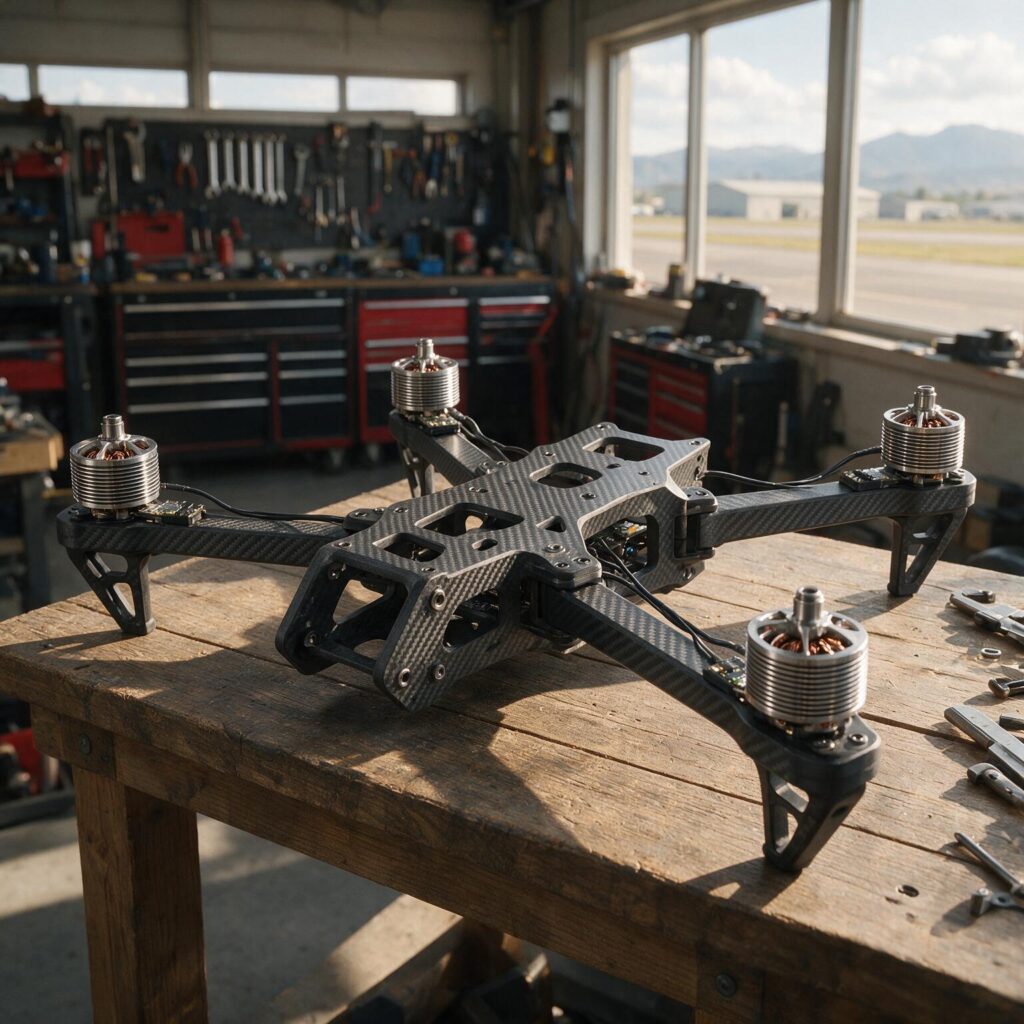
When a multirotor manoeuvres, the thrust distribution across its arms is asymmetric. An arm that flexes under that loading ΓÇö even slightly ΓÇö affects the effective thrust vector and requires the flight controller to compensate. A stiff arm does what the flight controller expects. Carbon fiber motor arms are significantly stiffer than fibreglass at equivalent weight, and comparable or superior to aluminium at a fraction of the mass.
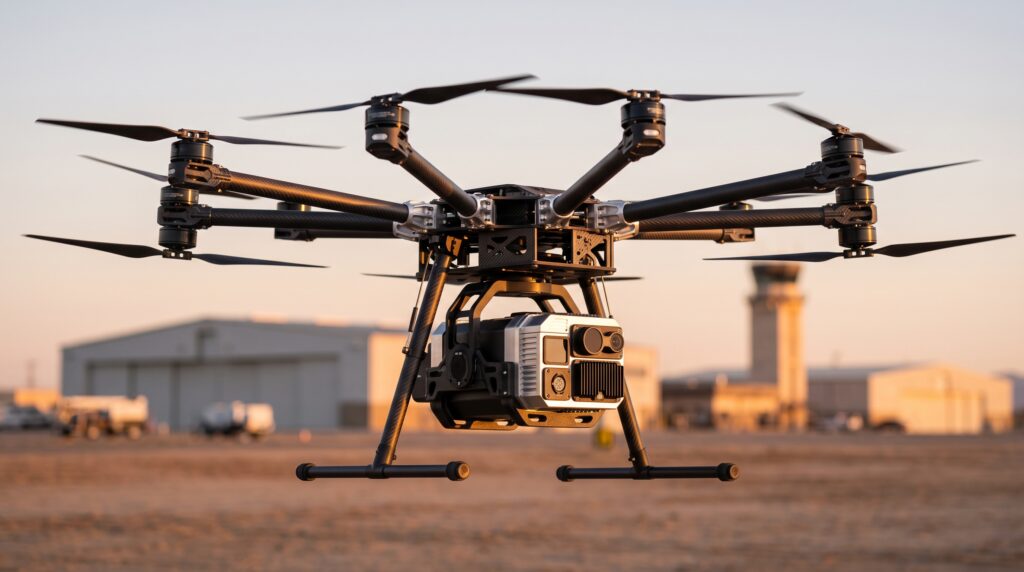
Commercial drones in agricultural, inspection, and delivery applications fly multiple sorties per day. The landing impacts, vibration cycles, and thermal cycling they accumulate are substantial. Carbon fiber composites handle cyclic loading well. The fatigue degradation that eventually limits the service life of metal components does not apply in the same way to properly designed CFRP structures. For operators counting on fleet availability, this matters.
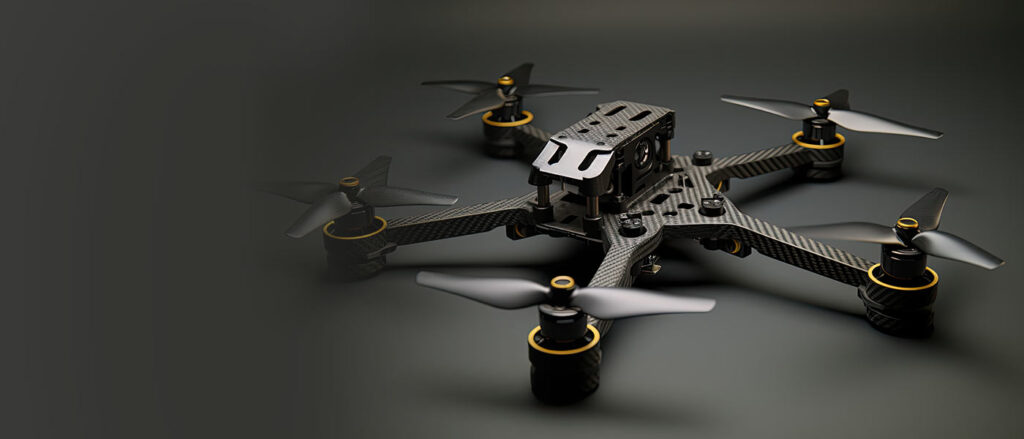
Agricultural and inspection drones operate in humidity, dust, rain, and the full range of field conditions. Carbon fiber does not corrode. It doesn't oxidise or form surface degradation that affects the structural section. A CFRP arm treated correctly will outlast an aluminium equivalent in field deployment conditions.
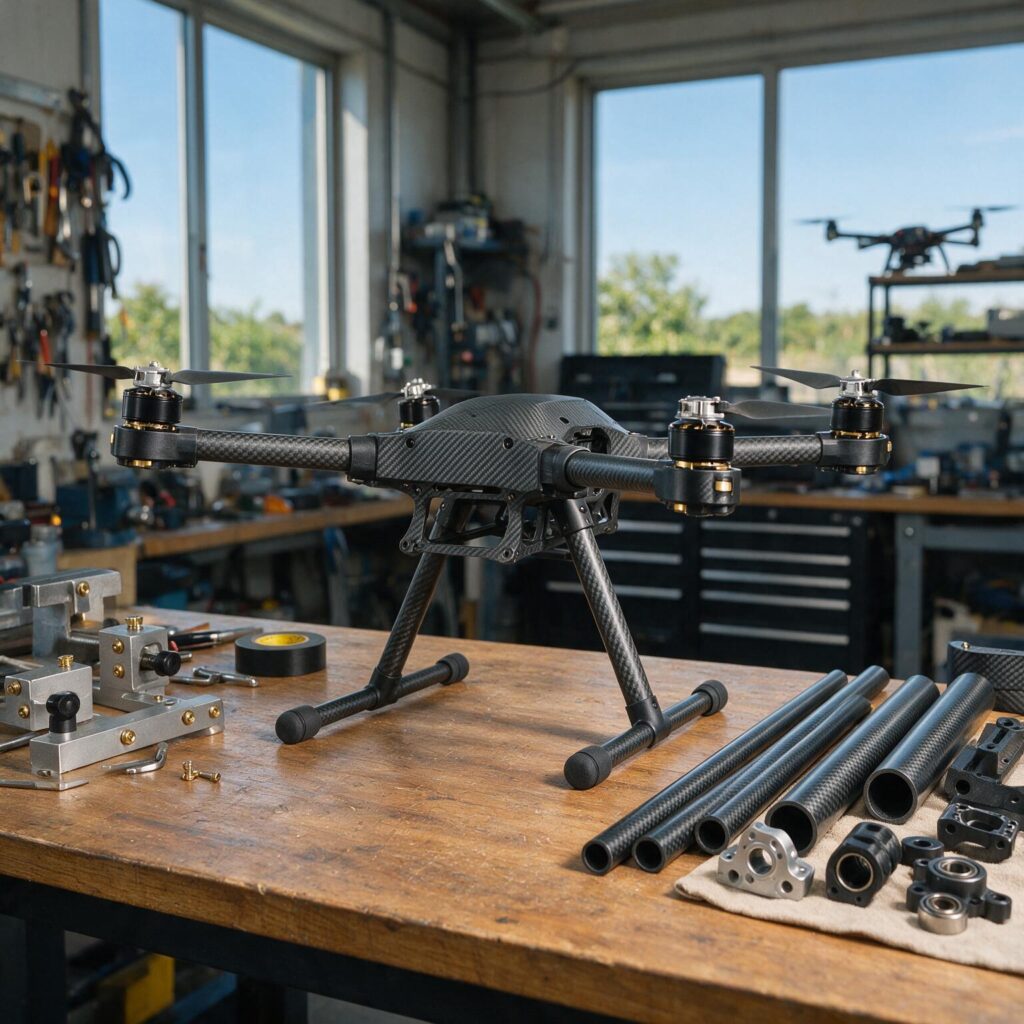
Prepreg Carbon Fiber Tubes for Motor Arms, Booms, and Frame Members
Tubes are the primary structural element in most UAV platforms. Motor arms, centre-to-arm connections, fuselage booms, and landing gear struts all rely on tubes that are stiff, strong, light, and consistent in diameter and wall thickness. Our prepreg round and square CFRP tubes are manufactured in controlled batches with tight OD and ID tolerances. If you're producing multiple units and need every tube to behave identically, that consistency is what you're getting.We manufacture in standard sizes and custom dimensions. For UAV programmes with specific arm diameter, wall thickness, or length requirements, contact us with your specification.
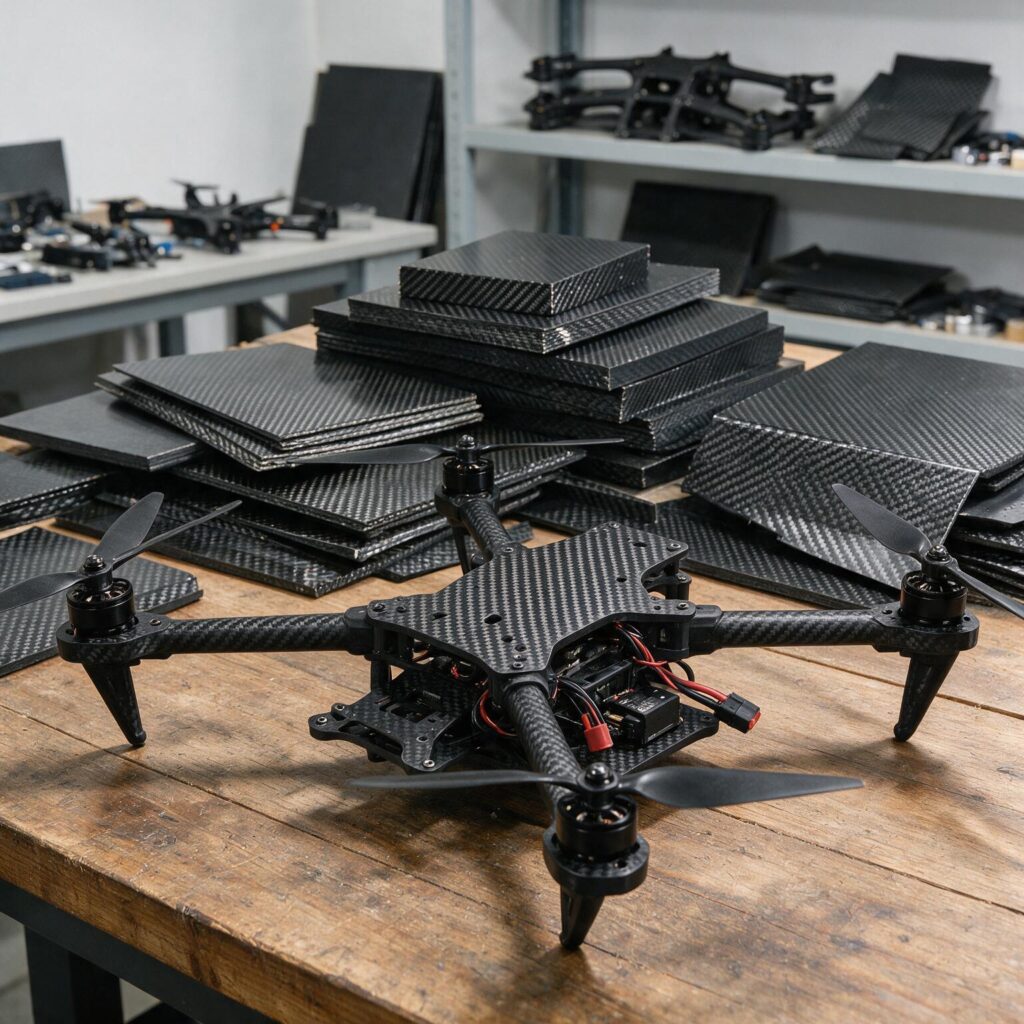
Carbon Fiber Sheets and Laminates for Centre Plates and Body Panels
The centre plate or stack plate is the structural hub of a multirotor which holds the flight controller, ESCs, battery, and payload interface, and it transmits loads between all of them. CFRP laminates are the standard material for this component because they are stiff, machinable to close tolerances, and available in the thicknesses needed for the design. We supply standard and intermediate modulus carbon fiber sheets and laminates in the thickness range appropriate for UAV structural plates.
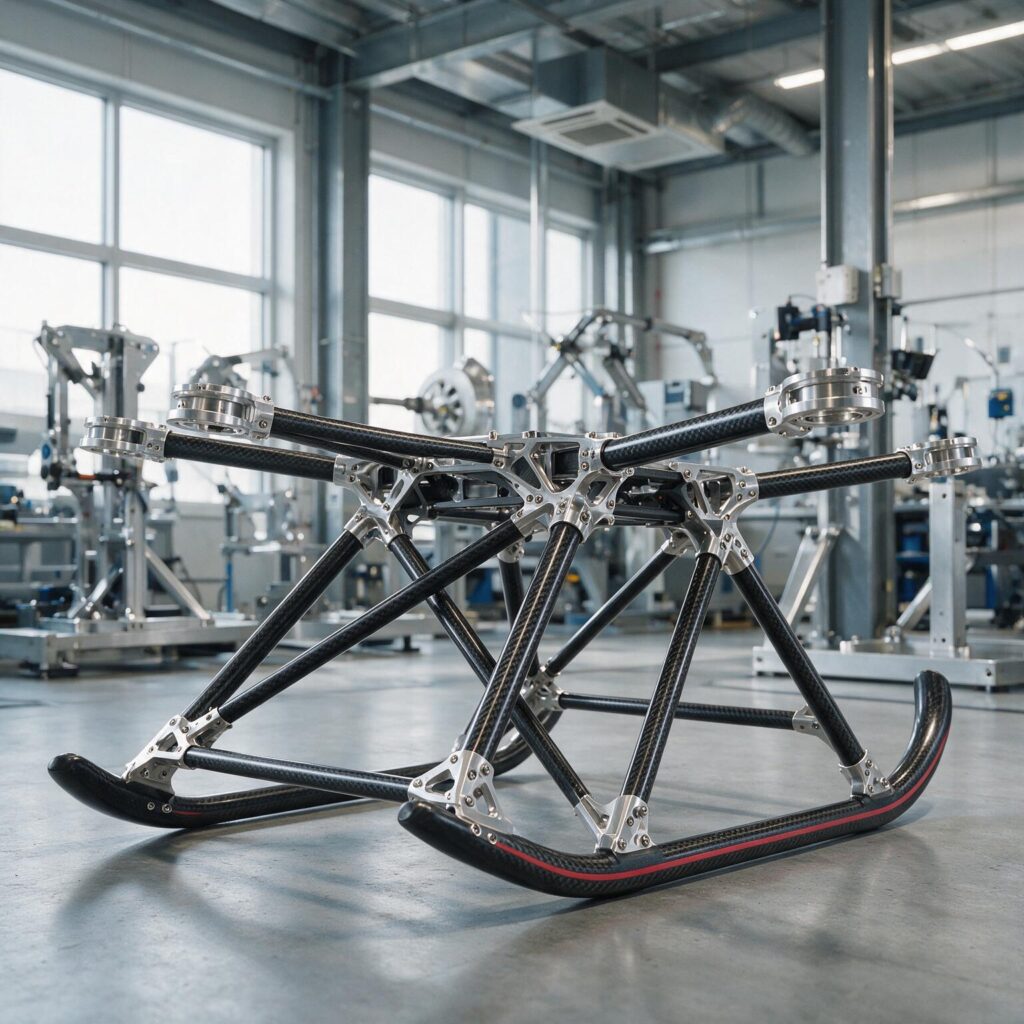
Pultruded Carbon Fiber Rods for Structural Bracing and Fixed-Wing Spars
Fixed-wing and hybrid UAV platforms use carbon fiber rods extensively as wing spars, tail booms, push rods, and diagonal bracing elements in space-frame fuselage designs. Pultruded CFRP rods offer very high axial stiffness in a small cross-section. We manufacture in a range of diameters with consistent mechanical properties along the full length and tight OD tolerances. For wing spar applications where straightness and dimensional consistency are critical to aerodynamic performance, our production standard reflects that requirement.
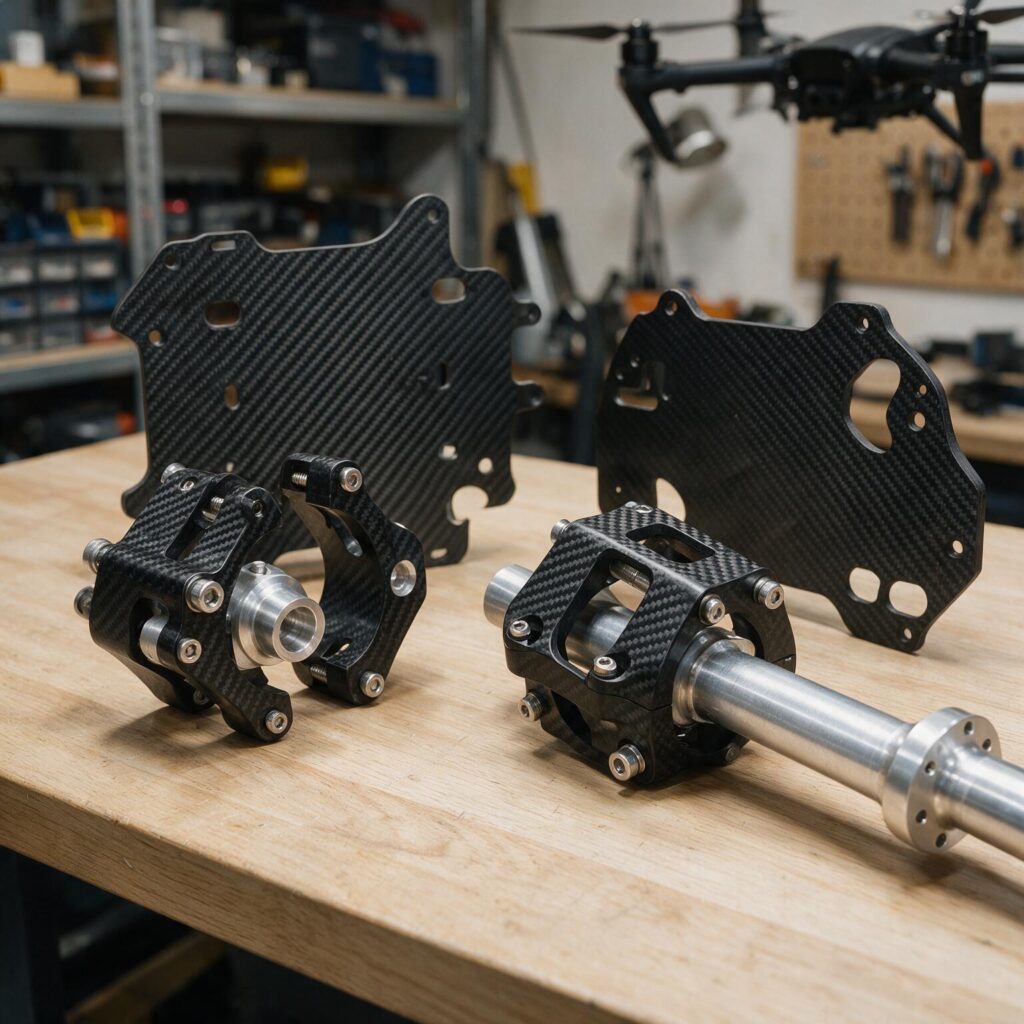
Machined CFRP Components for Motor Mounts, Plate Assemblies, and Custom Hardware
UAV designs increasingly incorporate custom-machined CFRP components that can't be made from standard tubes or sheets alone: motor mount plates, arm clamp assemblies, camera gimbal frames, payload interface brackets, and enclosure panels for electronics. We machine these from solid CFRP sheet or laminate stock. The tolerances we hold are consistent, the edge quality is clean, and we work from customer drawings or dimensional specifications.
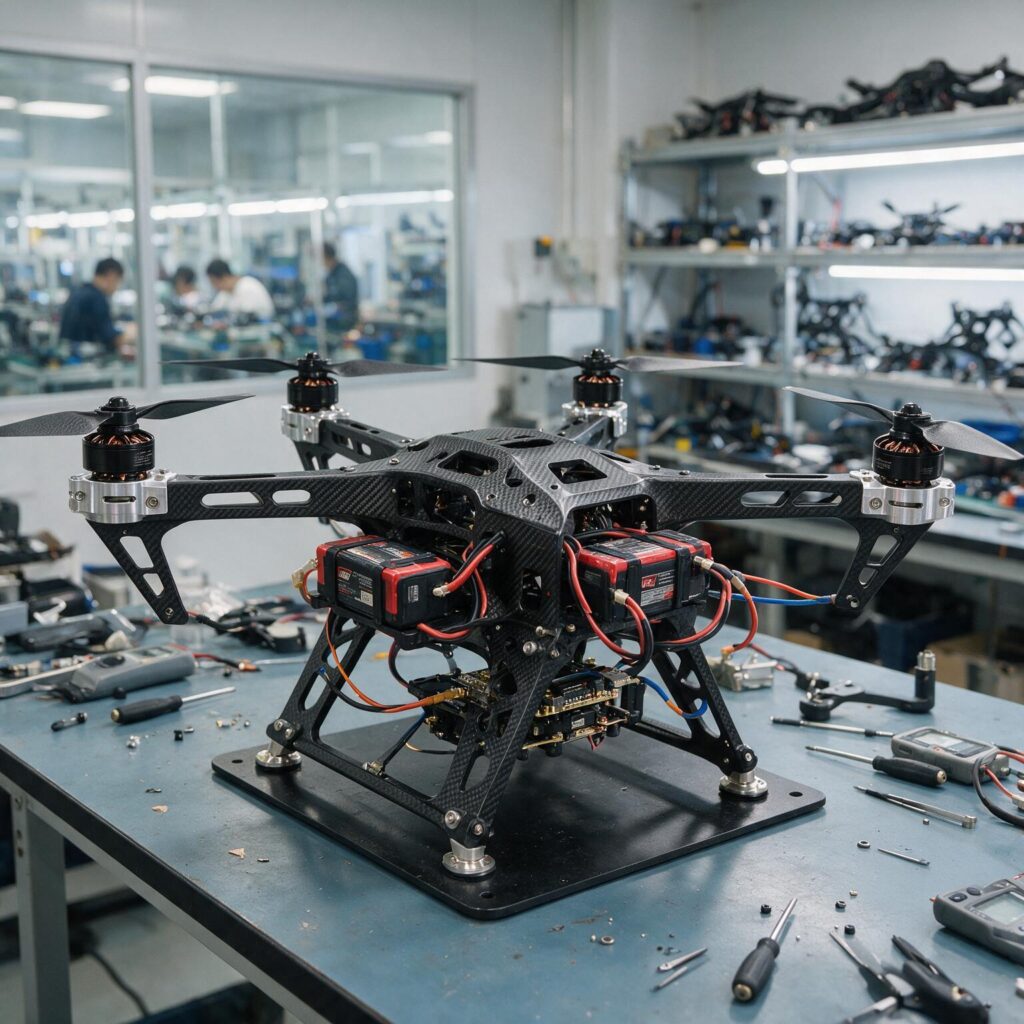
Custom Profiles and Specialist Components
Some UAV programmes require structural elements that don't fit standard product categories ΓÇö custom cross-section profiles, multi-element assemblies, or components in specialist fibre architectures. We discuss these requirements on a case-by-case basis. If you have an unusual design requirement, contact us and we'll tell you what's feasible.