
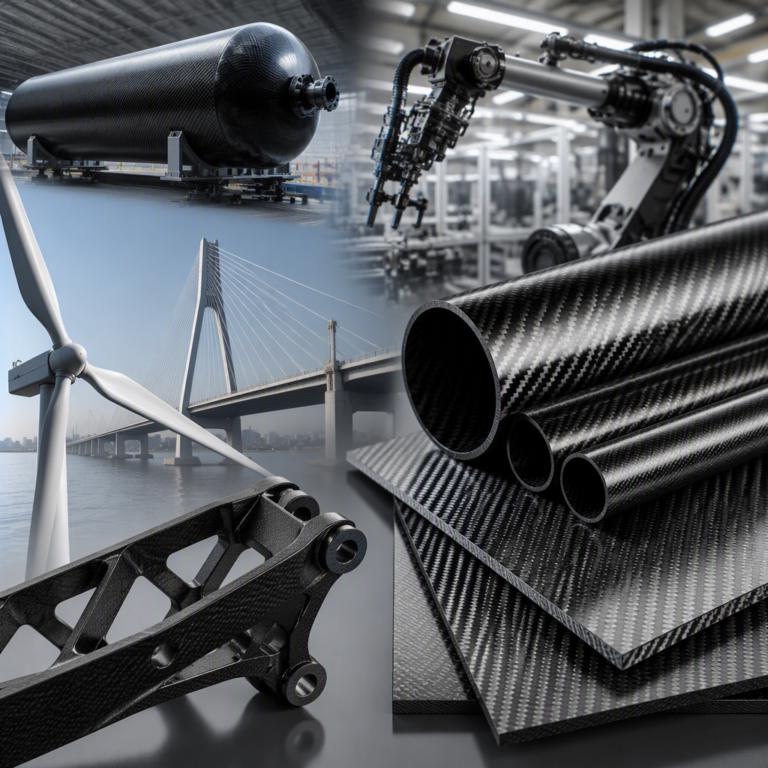
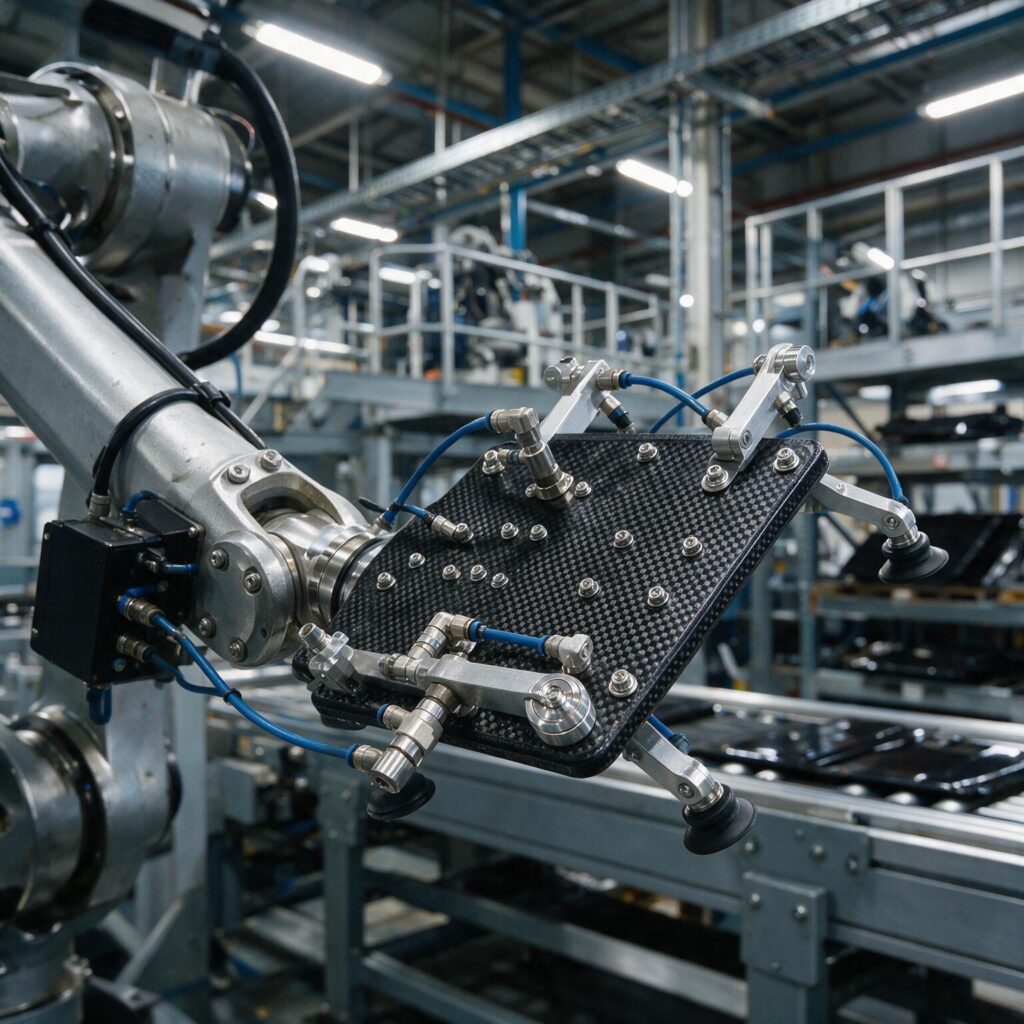
In any system where a component accelerates and decelerates repeatedly, mass is the enemy of speed. A carbon fiber robot arm link or end effector can be 40 to 60 percent lighter than its aluminium equivalent. That reduced inertia allows faster acceleration without overloading motors or gearboxes, which directly translates to higher throughput on production lines.
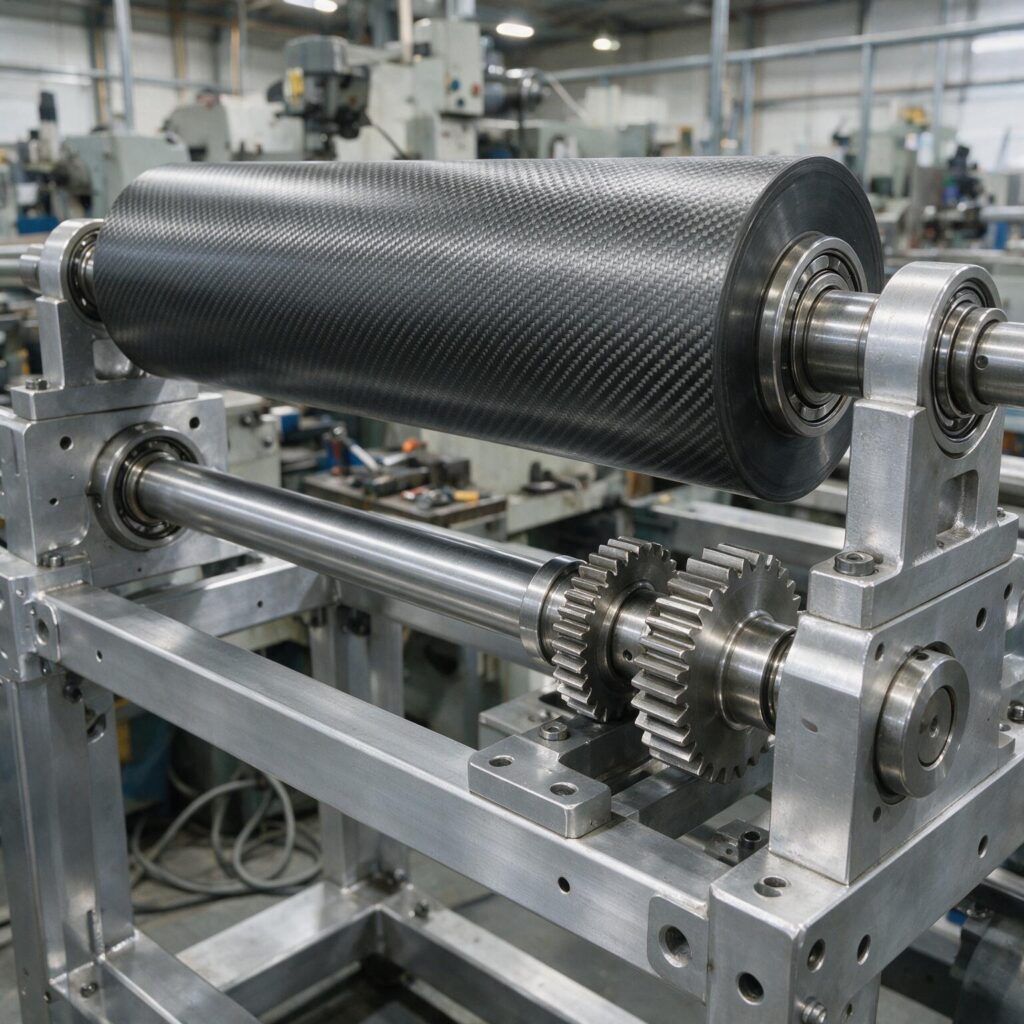
Precision automated systems fail when structural components flex under load. A roller that deflects, an arm that vibrates at its natural frequency, a measurement jig that shifts under applied force — all of these degrade output quality. Carbon fiber's high specific modulus means slender structural members stay where they're supposed to be.
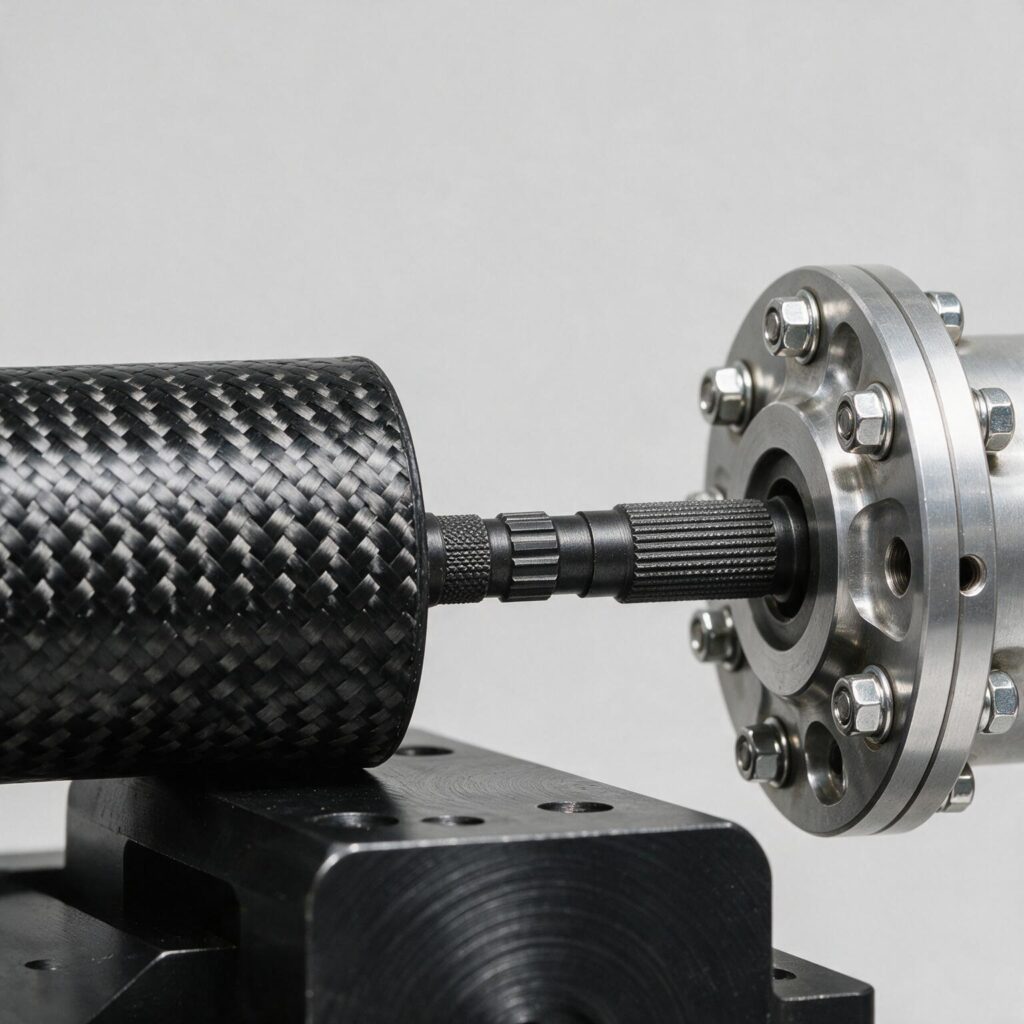
Industrial components go through millions of cycles. Metal fatigue is a real and expensive failure mode in high-cycle machinery — it's why rotating parts and structural members get scheduled replacement intervals. Carbon fiber handles cyclic loading fundamentally differently, without the progressive crack growth that drives metal fatigue. For high-cycle industrial components, that means longer service life and less unplanned downtime.
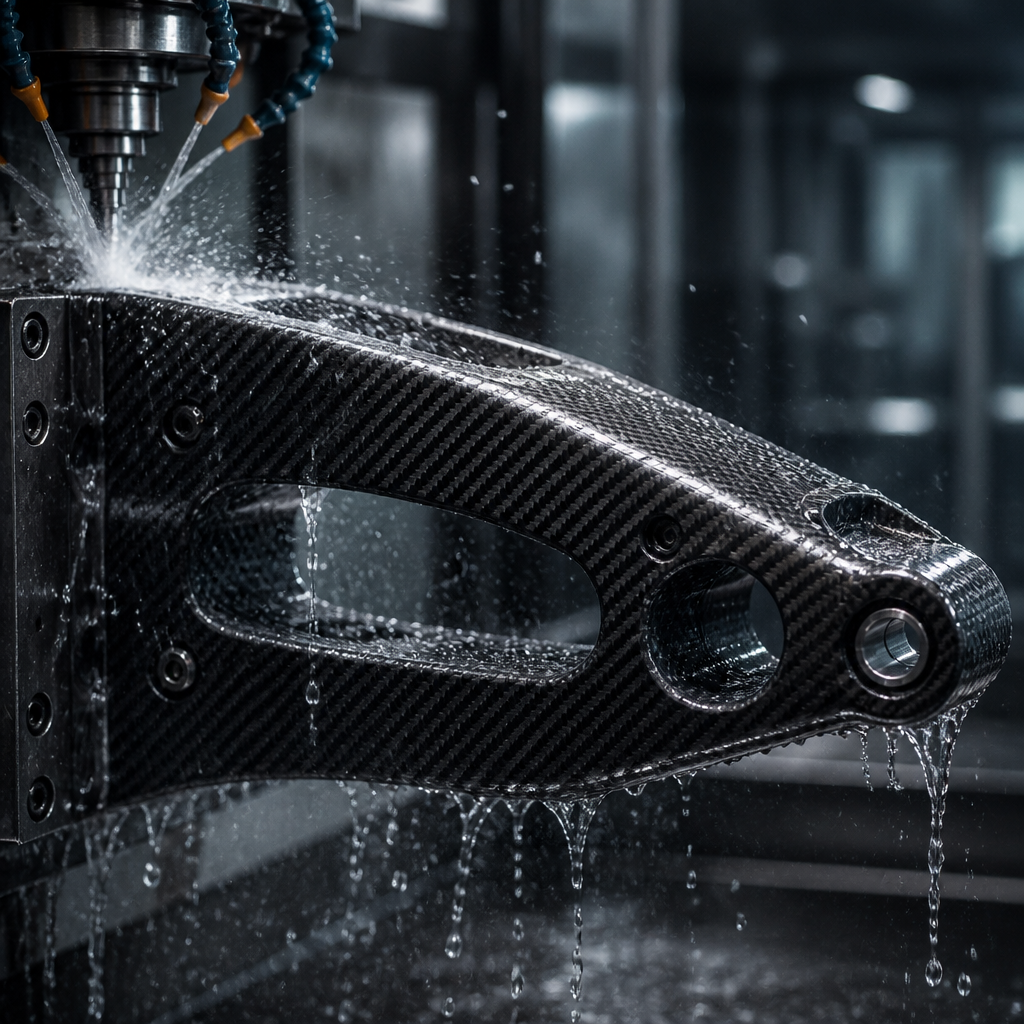
Industrial environments, coolants, cutting fluids, cleaning chemicals, and moisture are hard on metals. Carbon fiber composites are resistant to most of these without special coatings or treatments. Fewer corrosion-related maintenance interventions, longer component life.
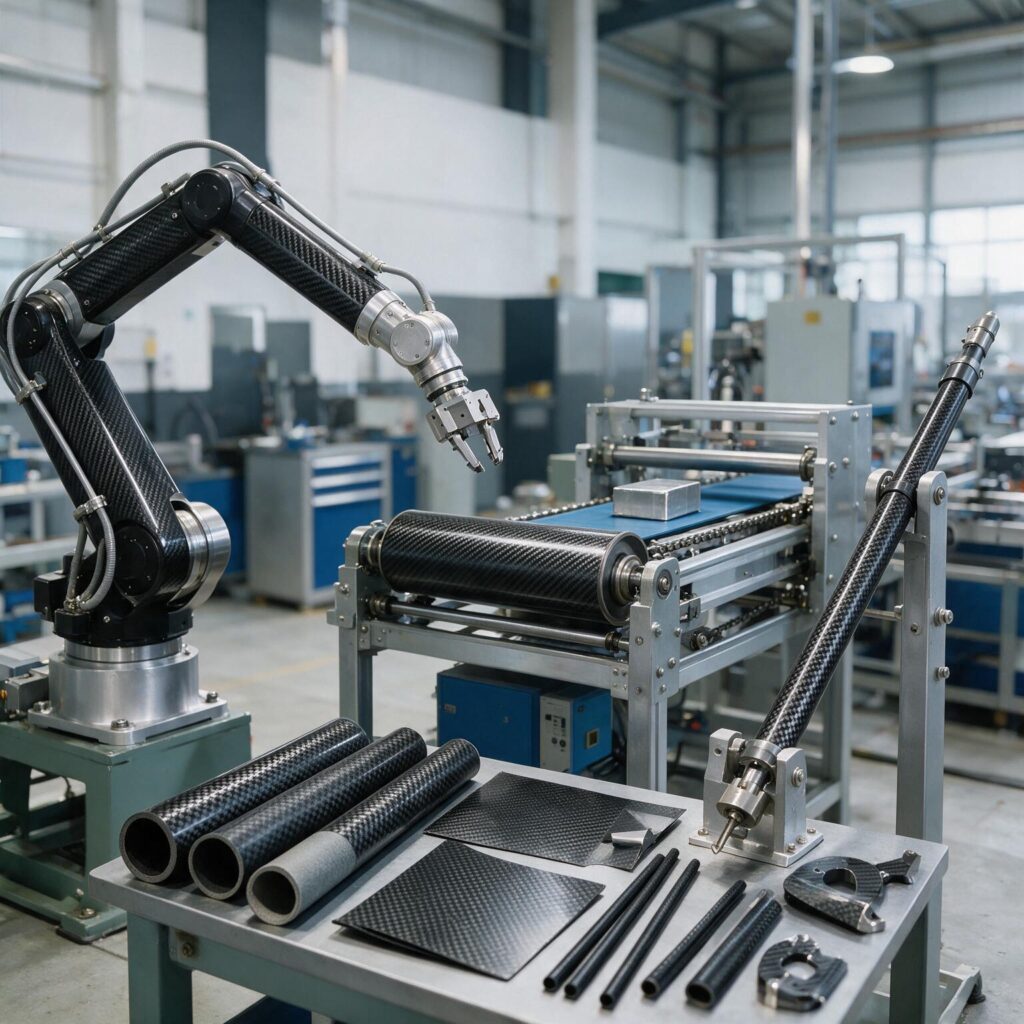
Jigs, fixtures, measurement systems, and precision tooling need to stay dimensionally stable as the factory temperature changes through the day. Carbon fiber holds its shape more predictably than aluminium or steel across temperature variation, which matters for anything where repeatability is the point.
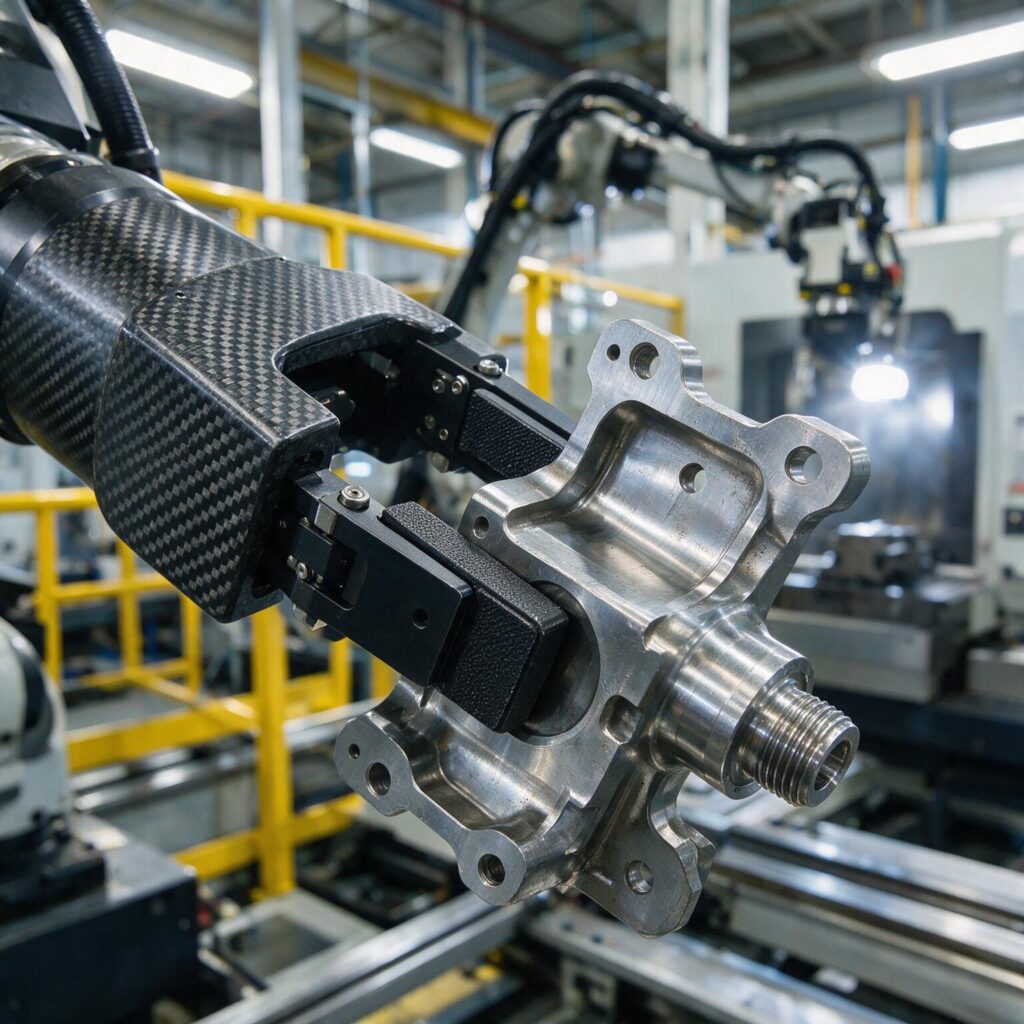
What We Make for Industrial Applications
The structural links of a robot arm, and the end effectors that do the actual work, are prime candidates for carbon fiber. Lighter arm links mean the same motors can move faster or handle more payload. Lighter end effectors mean lower cycle inertia. We supply carbon fiber tubes and profiles for arm structural links, and machined CFRP parts for custom end effector frames and grippers. If you're rebuilding or upgrading a robot system and want to cut moving mass, this is a useful conversation to have.
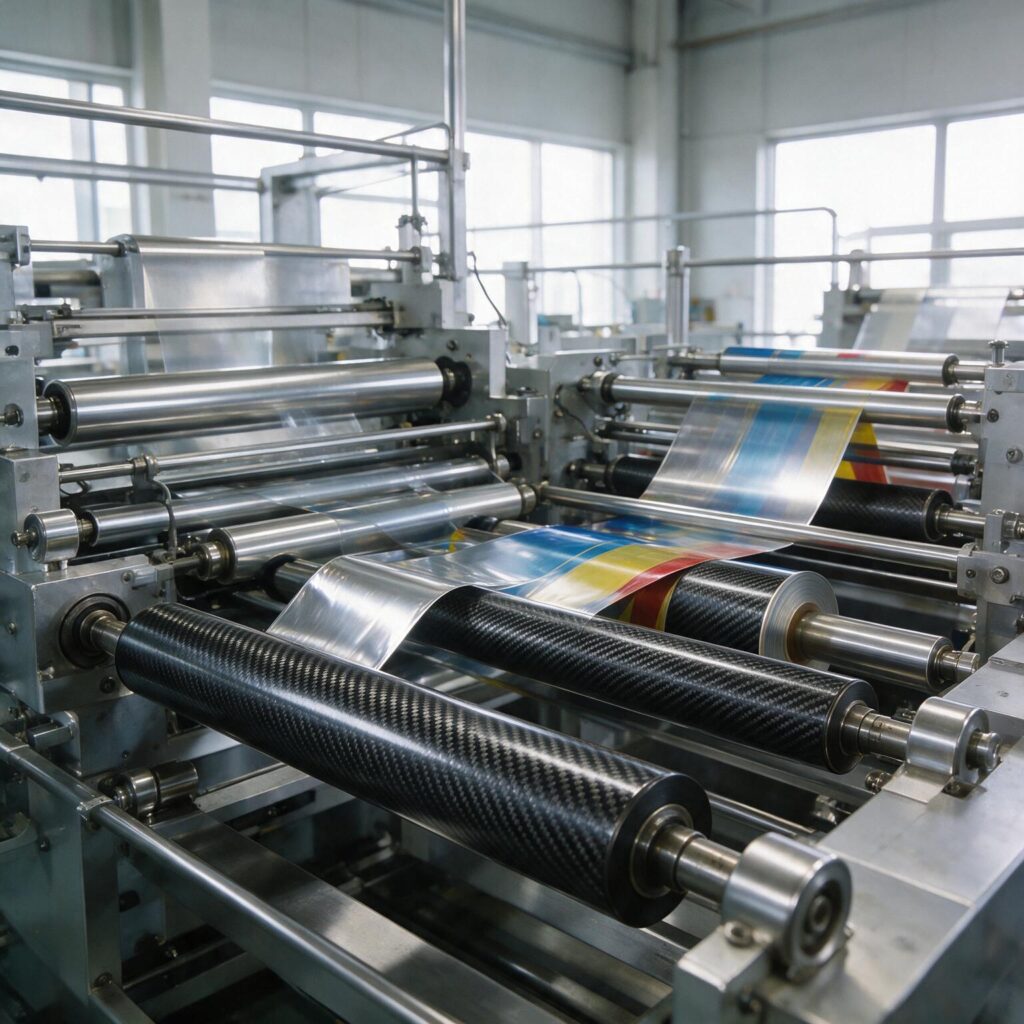
Carbon Fiber Rollers
Web handling, printing, packaging, laminating, textiles, any production process that runs sheet or web material over rollers benefits from lighter, stiffer rollers. Steel rollers are heavy, which limits line speeds and requires powerful drives. Carbon fiber rollers run at higher speeds with less drive energy, stay straighter at speed, and don't need the same balancing effort at high RPM. We produce carbon fiber tubes in the diameters and wall thicknesses suited to roller applications, with consistent roundness and surface quality.
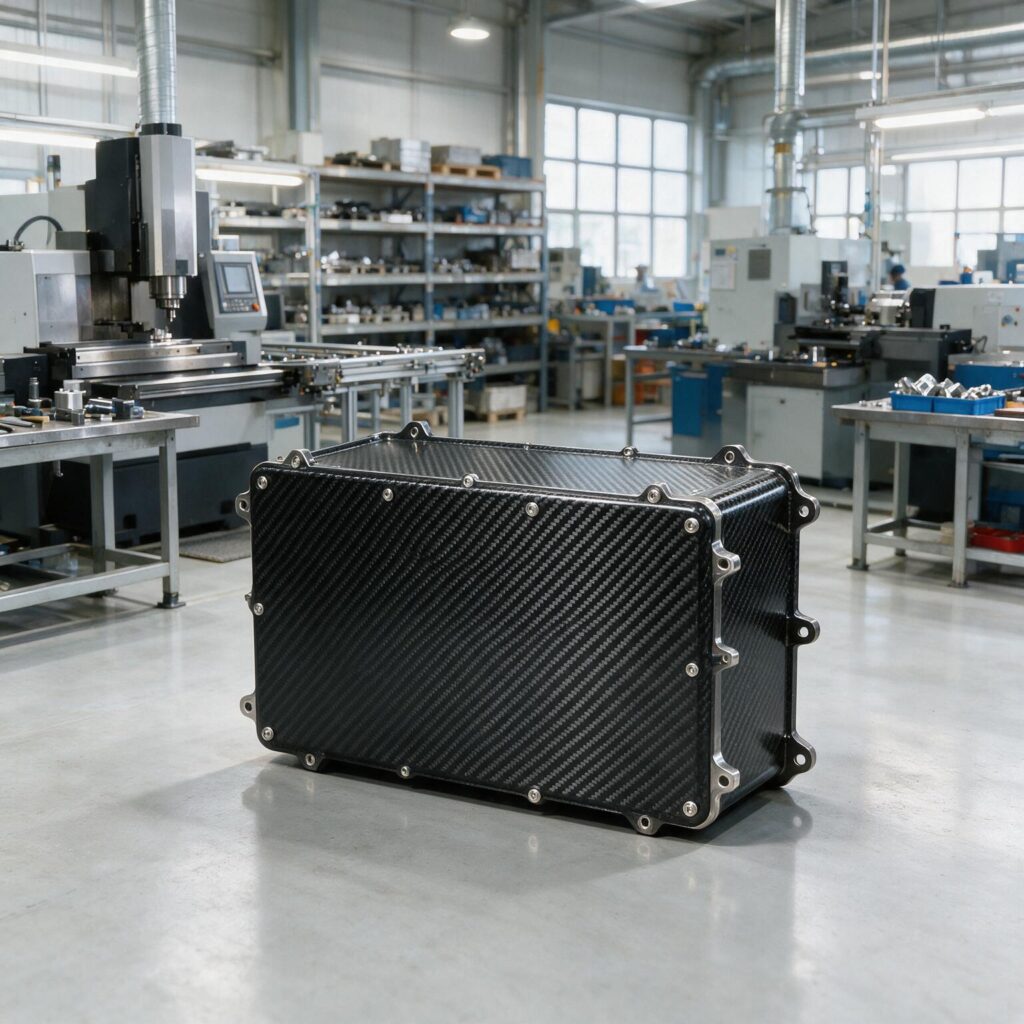
Electronic Enclosures and Control Housings
Carbon fiber has genuinely useful electromagnetic properties — it provides EMI shielding while being significantly lighter than steel or even aluminium enclosures. For control boxes, sensor housings, and equipment cases in mobile or weight-sensitive industrial platforms, it's a practical alternative to metal. We machine carbon fiber sheets to produce custom enclosure components to customer drawings.
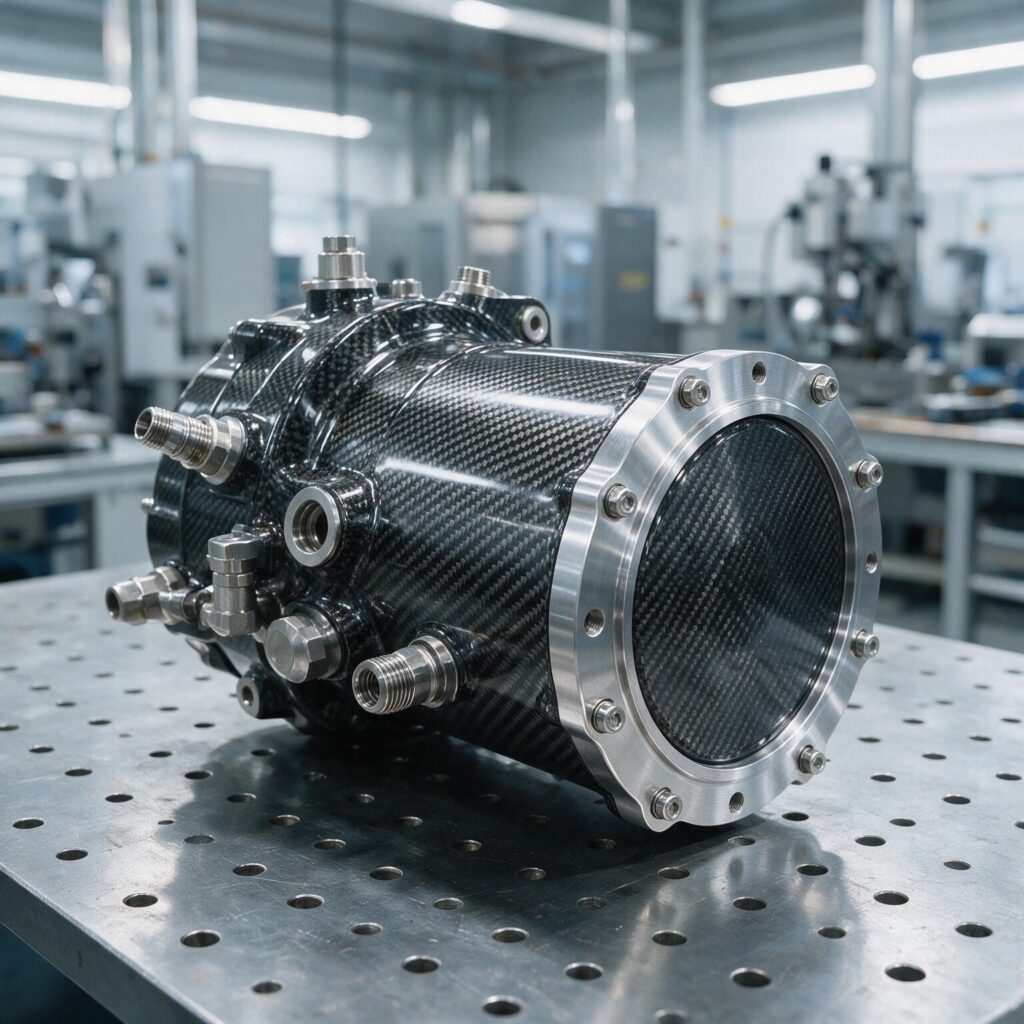
Composite Vanes
Rotary compressors and vacuum pumps use vanes that need to combine low mass, dimensional stability under rotation, and resistance to wear. Carbon fiber composites with appropriate matrix selection and surface treatment can meet all three requirements simultaneously. We supply composite vane materials and can discuss specific application requirements with customers in this area.
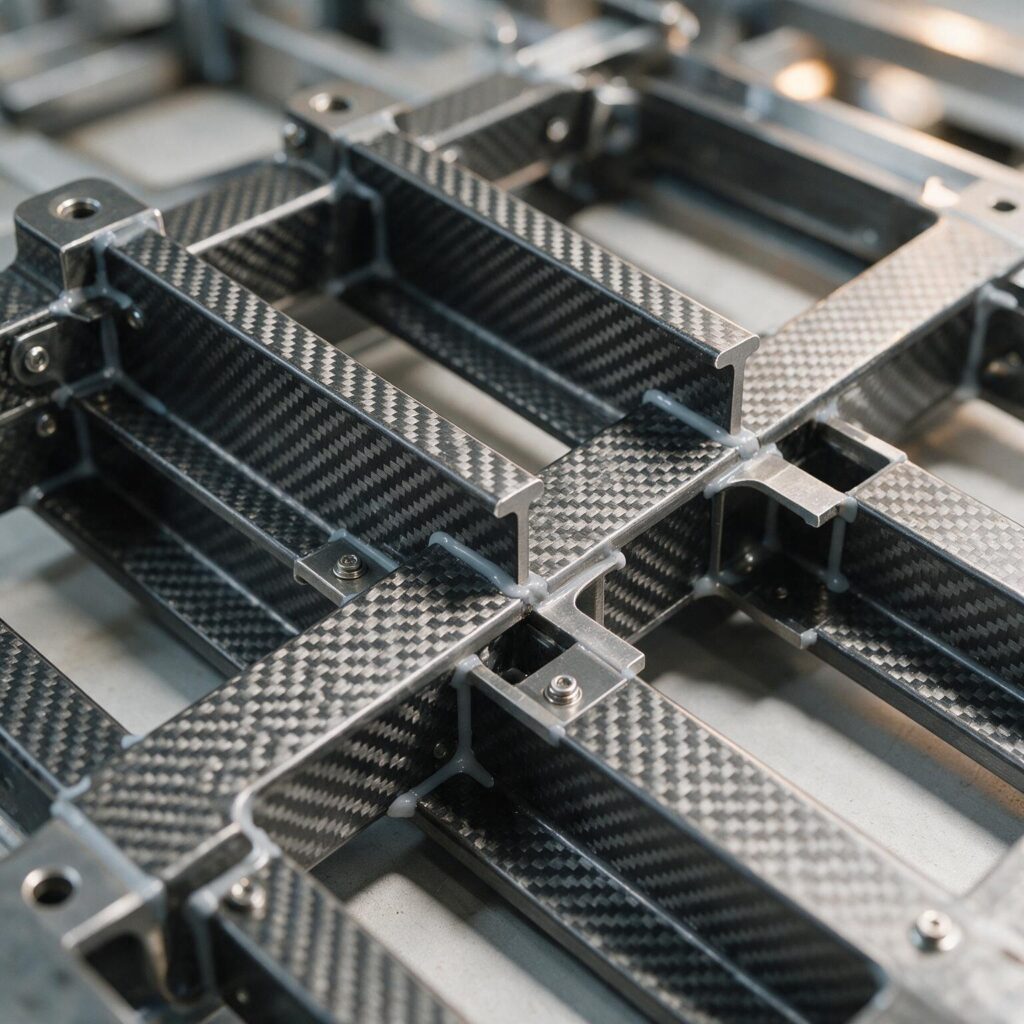
Telescopic Carbon Fiber Poles
Carbon fiber telescopic poles are used across a surprising range of industrial applications — overhead line work, inspection systems, camera and sensor positioning, solar installation, window cleaning equipment, and more. The combination of rigidity and light weight allows longer reach without the flex or weight penalty of fibreglass or aluminium alternatives. We manufacture prepreg carbon fiber tubes in the dimensions suited to telescopic pole construction, including taper ratios and wall thicknesses for specific reach and load requirements.
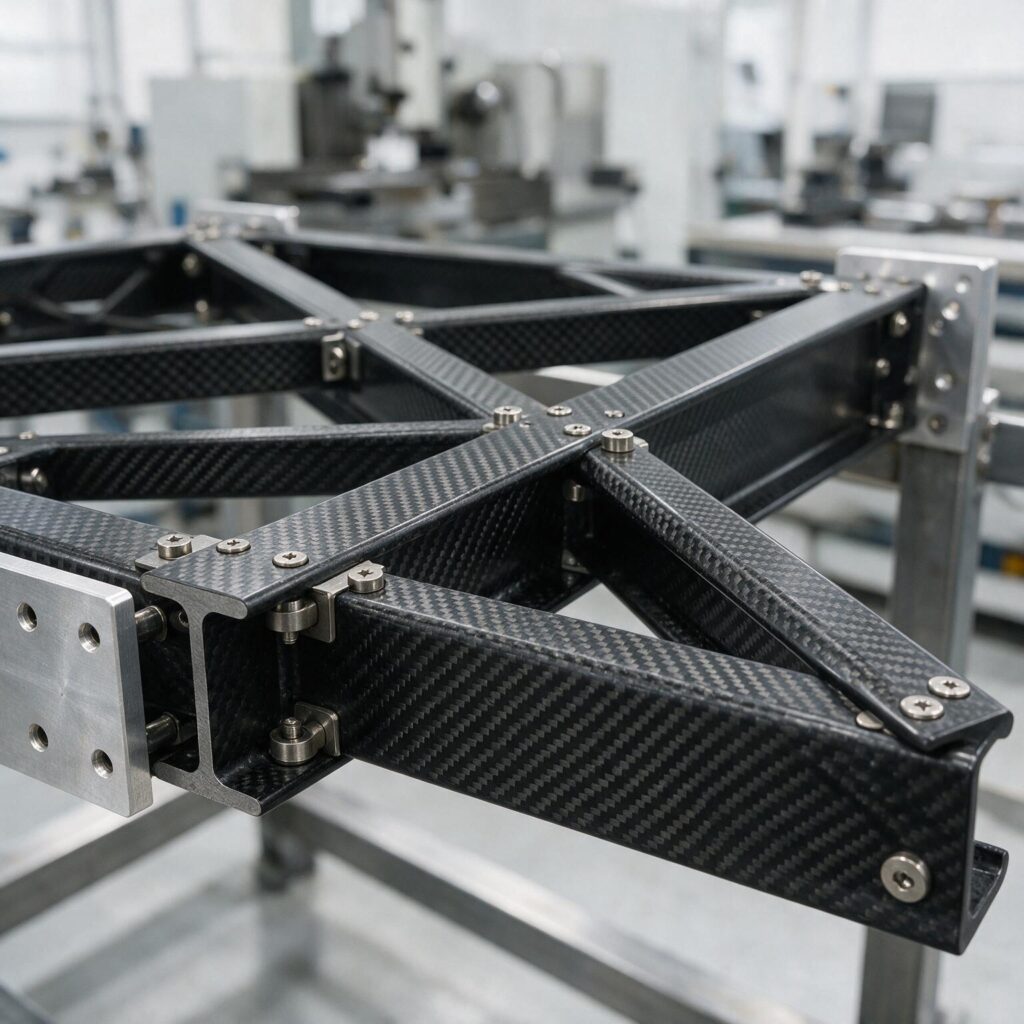
Structural Profiles for Frames and Subframes
Pultruded carbon fiber flat bars, C-channels, I-sections, and angle profiles can replace steel and aluminium in jigs, fixtures, machine frames, and lightweight structural assemblies. They offer high axial stiffness at a competitive cost in continuous lengths. For applications where you're building a frame or subframe and weight matters, these are worth evaluating.