
India’s Composite Manufacturing Industry: Growth, Trends & Opportunities in 2026
👁 Reads: 1559
The Indian composite manufacturing industry is entering a transformative phase. Driven by rapid industrialisation, infrastructure expansion, and the push for lightweight, high-strength materials, composites are becoming essential across sectors.
According to data from Stratview Research and the FRP Institute, the composite market is projected to reach USD 2.8 billion by 2030, growing at a Compound Annual Growth Rate (CAGR) of approximately 7.8%. From aerospace to automotive and renewable energy, the demand for advanced composite materials is accelerating and positioning India as an increasingly significant player in global composite manufacturing.
In this blog, let’s explore the key growth drivers, emerging trends, and market opportunities shaping the carbon fiber market in India through 2026 and beyond with practical insights for manufacturers, suppliers, and businesses looking to enter or expand in this high-growth sector.
Understanding the Composite Industry in India
Composite materials are engineered by combining two or more materials to achieve superior strength, durability, and weight reduction.
In India, composite materials are widely used across:
- Automotive components
- Wind energy blades
- Construction reinforcements
- Defence and aerospace applications
The composite industry's growth in India is closely tied to government initiatives including the Production Linked Incentive (PLI) scheme, which has allocated over ₹26,000 crore to advanced manufacturing sectors, and the National Infrastructure Pipeline (NIP), a ₹111 lakh crore investment programme running through 2025 — both of which are driving sustained demand for high-performance materials.
What Is Driving Composite Industry Growth in India?
1. Demand for Lightweight Carbon Fiber Composites in India
Industries are increasingly shifting toward lightweight materials to improve efficiency and reduce costs. Carbon fiber composites offer a strength-to-weight ratio approximately five times greater than steel at roughly one-fifth the weight, making them indispensable in weight-sensitive applications.
Carbon fiber tubes and CNC-machined components are increasingly powering UAVs and drones — a sector that is expanding rapidly as India's drone industry is projected to reach USD 1.8 billion by 2030 (Source: EY-FICCI Report, 2023). Carbon fiber sheet materials are simultaneously seeing strong demand in structural reinforcement, panels, and industrial applications where weight reduction is critical.
2. Carbon Fiber in India's Automotive and EV Manufacturing
India's electric vehicle market is among the fastest-growing globally. EV sales in India reached 1.53 million units in FY2023–24, a 40% year-on-year increase (Source: Society of Indian Automobile Manufacturers, 2024). The government's FAME II scheme has committed ₹10,000 crore to accelerate EV adoption and composites are a direct beneficiary.
EV manufacturers are turning to composite materials to reduce vehicle weight, which directly extends battery range. A 10% reduction in vehicle weight can improve EV range by approximately 6–8% (Source: International Energy Agency). Components such as carbon fiber rods and structural reinforcements are being integrated into automotive designs to improve durability while reducing overall weight — a trend expected to intensify as EV volumes scale.
3. Infrastructure Growth Fuelling Demand for Carbon Fiber Fabric
India's renewable energy sector is a major and growing consumer of composite materials. The country has set an ambitious target of 500 GW of renewable energy capacity by 2030, with wind energy accounting for a significant portion (Source: Ministry of New and Renewable Energy, India).
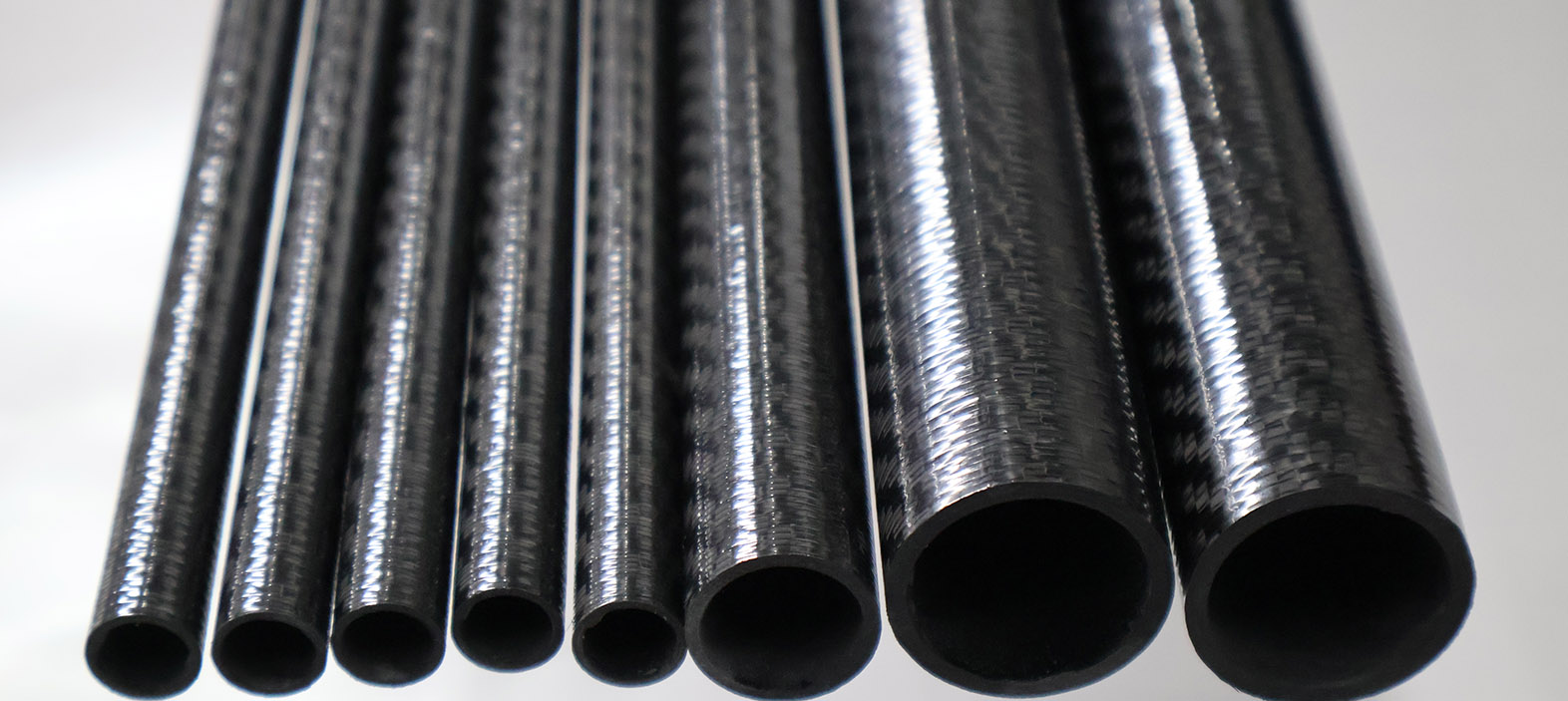
Wind turbine blades, which can exceed 80 metres in length and rely almost entirely on composite materials for their structure, are one of the largest single applications for composites in India. Advanced materials like carbon fiber pultruded tubes are increasingly used in structural frameworks and energy applications due to their high strength and corrosion resistance.
4. Infrastructure and Construction Boom
India's National Infrastructure Pipeline targets ₹111 lakh crore in infrastructure investment through 2025, covering smart cities, highways, metro rail, and port development. This sustained investment is creating strong demand for high-performance construction materials.
Composites are being deployed in:
- Bridge strengthening — carbon fiber reinforced polymer (CFRP) systems can restore and increase the load-bearing capacity of ageing structures at a fraction of the cost of full replacement
- Seismic retrofitting — carbon fiber wrapping systems increase the ductility and shear strength of concrete columns, critical in earthquake-prone regions
- Industrial flooring systems — composite grating and panels offer corrosion resistance and longevity in chemical, marine, and industrial environments
Carbon fiber fabric plays a crucial role in reinforcement applications, offering flexibility and superior tensile strength — with tensile strength values typically ranging from 3,500 to 7,000 MPa depending on the grade, compared to approximately 400–550 MPa for structural steel.
Key Trends in the Carbon Fiber Market in India for 2026
1. Increased Adoption of Advanced Carbon Materials
The carbon fiber market in India is expanding as industries recognise the long-term economic case for composites — lower maintenance costs, extended service life, and reduced total cost of ownership despite higher upfront material costs.
Studies suggest composite structures can reduce lifecycle maintenance costs by 30–40% compared to equivalent steel or aluminium assemblies (Source: CompositesWorld).
Applications are now extending well beyond aerospace into:
- Consumer electronics and wearables
- Sports and leisure equipment
- Industrial machinery and automation
- Medical devices and imaging equipment
2. Shift Toward Automation and Precision Manufacturing
Manufacturers are investing in advanced production technologies including automated fibre placement (AFP), automated layup, and pultrusion processes.
3. Sustainability and Material Efficiency
Sustainability is becoming a decisive factor in material selection. The composites industry is responding — investment in recyclable thermoset and thermoplastic composites is accelerating globally.
Lightweight materials like carbon fiber sheet solutions contribute meaningfully to reduced energy consumption across industries. In aviation, for example, every 1 kg of weight saved saves approximately 3,000 litres of fuel over an aircraft's service life — a statistic that translates directly into sustainability and cost arguments across sectors.
Future Outlook: India as a Global Composite Manufacturing Hub
As industries continue to prioritise lightweight, durable, and high-performance materials, composites will play a central role in shaping India's manufacturing future — from carbon fiber rods and pultruded tubes for industrial and aerospace applications, to carbon fiber fabric for infrastructure reinforcement and carbon fiber sheet solutions for the EV and automotive sector.
The Indian government's 'Make in India' initiative continues to attract composite manufacturers and raw material suppliers. Several global players have announced India manufacturing investments. The expansion of the carbon fiber market in India, combined with advances in automated manufacturing, recyclable composite materials, and precision engineering, will further strengthen the country's position in the global supply chain.
NitPro Composites, a leading carbon fiber products manufacturer, supplier and exporter, brings state-of-the-art manufacturing facilities with customized orders for industrial requirements.