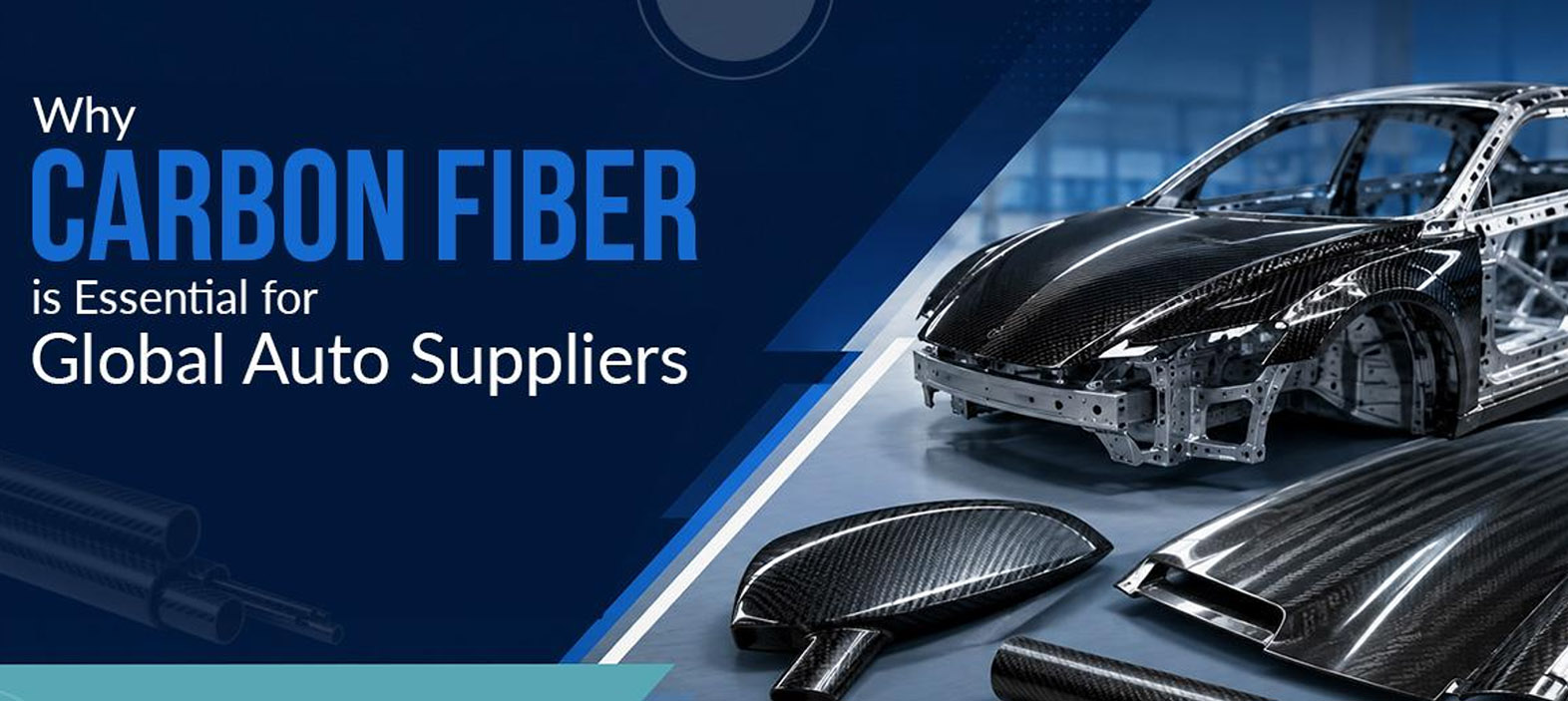
Why Carbon Fiber Components Are Becoming Essential for Global Auto Suppliers
👁 Reads: 42
Carbon fiber components are becoming standard in automotive manufacturing because they offer a higher strength-to-weight ratio than steel or aluminum, helping suppliers meet EV range targets and tightening emissions regulations. Global adoption of carbon fiber rods, tubes, sheets, and CNC-machined parts is accelerating as OEMs replace metal components across vehicle platforms.
At NitPro Composites, we work with manufacturers who are re-engineering their supply chains around carbon fiber components, from carbon fiber rods and carbon fiber tubes to carbon fiber sheets and precision carbon fiber machined CNC parts. Here's why this shift is happening, and why it's likely to accelerate.
The Market Numbers Tell the Story
Carbon fiber composites for automotive applications are no longer a niche in racing and motor sports. The global automotive carbon fiber composites market is projected to grow from roughly $28.8 billion in 2025 to $31.65 billion in 2026, and is expected to reach over $51 billion by 2031, a compound annual growth rate above 10%. Other industry forecasts put the broader carbon fiber-in-automotive segment on track to nearly double by the early 2030s, driven largely by electric vehicle programs, lightweighting mandates, and stricter CO₂ emission standards in Europe and North America.
This growth isn't theoretical; there are multiple advantages of Carbon Fiber for automotive manufacturing. It reflects real design decisions being made on production lines today, as OEMs and tier suppliers replace steel and aluminum components with carbon fiber alternatives wherever weight savings translate directly into performance or range gains.
Also Read: Five Things to Know Before Using Carbon Fiber Auto Parts
1. Lightweighting Is No Longer Optional
Every kilogram removed from a vehicle improves fuel efficiency in combustion vehicles and extends range in EVs. Carbon fiber offers a strength-to-weight ratio far superior to steel and aluminum, making it the material of choice for structural and semi-structural components.
Suppliers using carbon fiber pultruded rods and carbon fiber prepreg rods can deliver parts that maintain rigidity under load while cutting significant weight compared to metal equivalents, a critical advantage for EV battery enclosures, chassis reinforcements, and crash structures.
2. Electric Vehicles Are Accelerating Demand
EV platforms depend heavily on weight reduction to offset the mass of battery packs. Carbon fiber composites for automobile industry applications — including drive shafts, battery housings, and underbody panels — help manufacturers claw back range without compromising safety. As EV production scales globally, this demand curve is expected to steepen further.
3. Precision Manufacturing Meets Design Flexibility
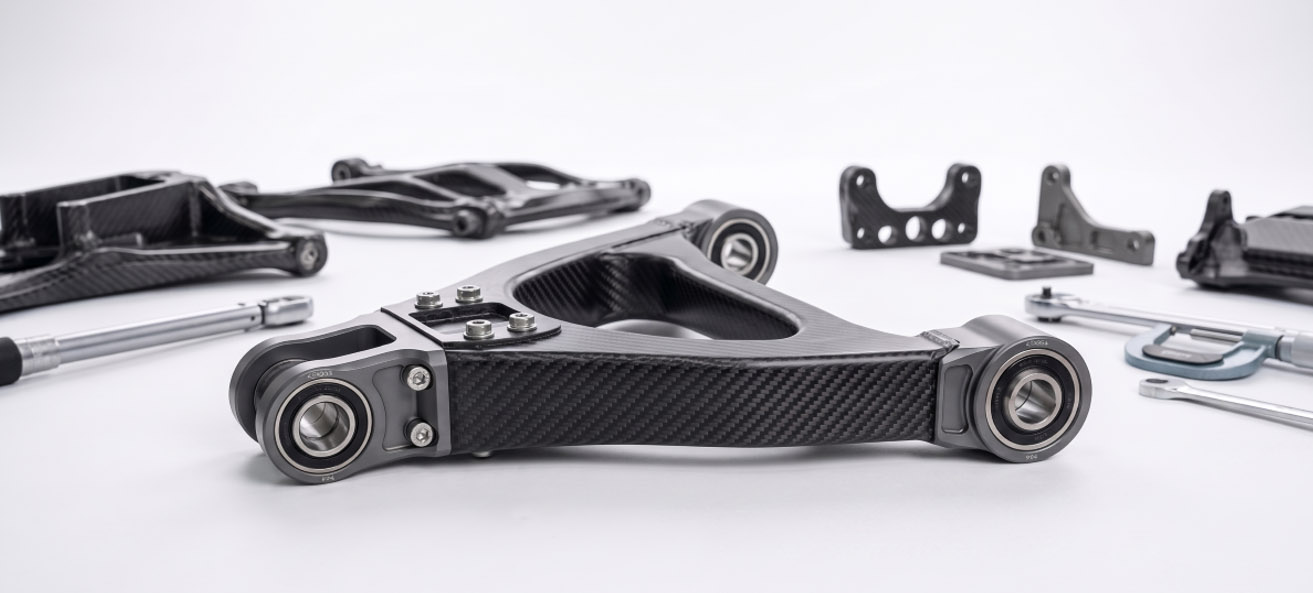
Modern auto suppliers need components that meet exact tolerances without compromising material integrity. Carbon fiber machined CNC parts allow engineers to achieve complex geometries and tight tolerances that standard molding processes can't always deliver, making them ideal for connectors, brackets, and custom structural inserts. Combined with carbon fiber sheets for panel applications and carbon fiber rods and tubes for structural or drivetrain uses, suppliers now have a full toolkit to replace metal parts across nearly every vehicle subsystem.
4. Regulatory Pressure Is Reshaping Supply Chains
Stringent CO₂ emission regulations across Europe, alongside evolving fuel-economy standards elsewhere, are pushing OEMs to demand lighter components from their supplier base. This regulatory pressure is a primary driver behind the market's double-digit growth projections, forcing suppliers who haven't yet integrated composites into their offering to catch up quickly or risk losing contracts to more advanced competitors.
5. Durability and Lifecycle Value
Beyond weight savings, carbon fiber offers superior fatigue resistance, corrosion resistance, and dimensional stability compared to traditional metals. For suppliers, this means fewer warranty claims and longer component lifespans, a compelling value proposition for OEMs focused on total cost of ownership, not just upfront part pricing.
Why Suppliers Are Partnering With Composite Specialists
Transitioning from metal to composite manufacturing isn't a simple material swap, it requires specialized expertise in fiber orientation, resin systems, and process control. This is why more global auto suppliers are partnering with dedicated composite manufacturers like NitPro Composites rather than trying to build this capability in-house from scratch. From prototyping with carbon fiber prepreg rods to scaling production with pultruded rods and CNC-machined structural parts, the right manufacturing partner shortens the path from design to production-ready components.
The Road Ahead
With the automotive carbon fiber composites market on track to more than double within the next several years, the question for suppliers isn't whether to adopt composites, but how quickly they can integrate them into their production capabilities. Companies that invest now in carbon fiber rods, tubes, sheets, and precision-machined parts will be best positioned to meet the lightweighting and efficiency demands of next-generation vehicle platforms.
NitPro Composites partners with global auto suppliers to deliver reliable, high-performance carbon fiber components engineered for the next generation of vehicles.
Frequently Asked Questions
Q1. Why Are Auto Suppliers Switching to Carbon Fiber Components?
A. Carbon fiber offers a much higher strength-to-weight ratio than steel or aluminum, helping automotive suppliers meet emissions regulations and EV range targets while maintaining strong structural performance.
Q2. What Automotive Parts Commonly Use Carbon Fiber?
A. Common applications include drive shafts, battery enclosures, chassis reinforcements, structural brackets, body panels, and interior trim. These components can be manufactured using carbon fiber rods, tubes, sheets, or CNC-machined carbon fiber components.
Q3. Is Carbon Fiber More Expensive Than Metal for Automotive Parts?
A. Upfront material and processing costs for carbon fiber are typically higher than those of steel or aluminum. However, weight savings, durability, performance, and potential lifecycle cost reductions can justify the investment, particularly for electric vehicles and high-performance automotive applications.
Q4. What's the Difference Between Pultruded and Prepreg Carbon Fiber Rods?
A. Pultruded carbon fiber rods are manufactured through a continuous pulling process, making them well suited for high-volume production and applications requiring consistent cross-sections. Prepreg carbon fiber rods use pre-impregnated fibers and are typically selected for applications requiring tighter tolerances, more complex designs, or customized mechanical properties.