
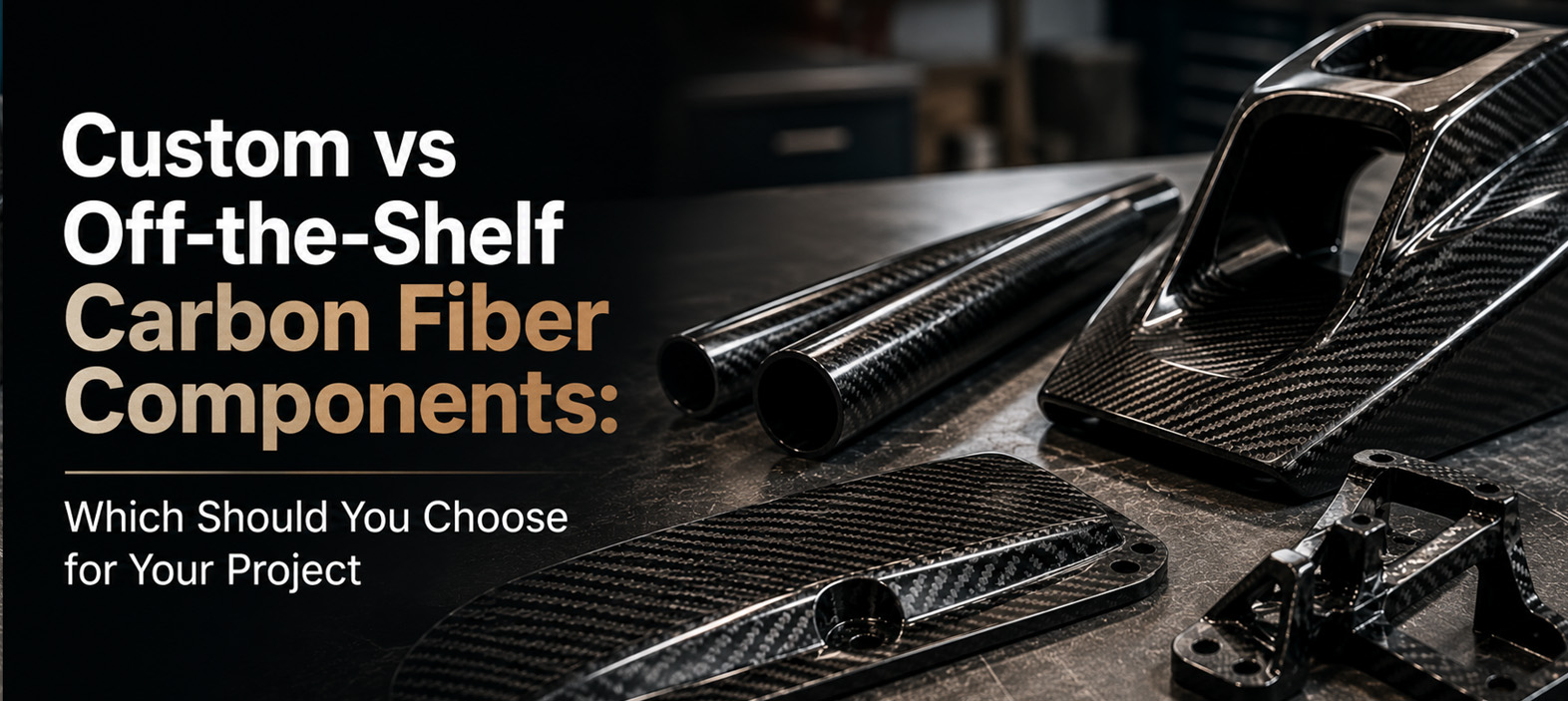
Custom vs Off-the-Shelf Carbon Fiber Components: Which Should You Choose for Your Project
👁 Reads: 2176
Carbon fiber composites have become the material of choice for engineers chasing strength without weight. From drone frames to aircraft brackets, the appeal is obvious: exceptional stiffness-to-weight ratios, corrosion resistance, and long-term durability. But once you've decided carbon fiber is right for your project, a second, equally important decision awaits: should you buy standard, off-the-shelf components, or invest in custom-engineered parts built around your exact specifications?
The answer depends on your application, budget, timeline, and how much performance you need to squeeze out of every gram.
The Case for Off-the-Shelf Components
Standard carbon fiber products such ascarbon fiber rods, standard-diameter carbon fiber pultruded tubes, and general-purpose carbon fiber sheets are manufactured in bulk to common industry dimensions. Pultrusion is a continuous process, which makes these tubes and rods fast to produce and inexpensive per unit. If your project calls for a straightforward round or square profile with consistent mechanical properties along its length, off-the-shelf stock is hard to beat on cost and lead time.
This route works well for hobbyist projects, prototyping, jigs and fixtures, camera rigs, and any application where the load paths are simple and predictable. Many carbon fiber composite manufacturers, including NitPro Composites, specialize in a wide range of diameters and wall thicknesses, so there's a good chance you'll find something close to what you need without waiting weeks for a custom quote.
The tradeoff is flexibility. Standard tubes and rods come in fixed lengths, diameters, and fiber orientations, usually a generic unidirectional or 0/90 weave designed for general-purpose stiffness rather than a specific load case. If your part needs to survive torsional loads, off-axis bending, or a tight-tolerance fit into an assembly, stock geometry may leave performance on the table.
When Custom Carbon Fiber Makes Sense
Custom components shine when the application has specific structural, thermal, or geometric demands that generic stock simply can't meet. This is where carbon fiber prepreg tubes come into play — manufactured with pre-impregnated resin systems and cured under controlled heat and pressure (often autoclave- or oven-cured), prepreg construction allows engineers to tailor fiber layup angles, ply counts, and wall thickness precisely to the load case. The result is a part optimized for a specific bending stiffness, torsional rigidity, or weight target rather than a one-size-fits-all profile.
Custom CFRP sheets and panels follow the same logic; layup schedules can be adjusted panel by panel to match localized stress concentrations, something impossible with standard flat stock. And when a part needs threaded inserts, precise mounting holes, or complex 3D geometry, machined CNC parts cut from solid carbon fiber billet or finished laminate can achieve tolerances that raw composite tube or sheet stock can't deliver on its own. Custom fabricators like NitPro Composites typically work directly with engineering teams to translate load calculations into a specific layup schedule rather than forcing the design around a catalog part.
Industry Applications Where Custom Wins
Several industries lean heavily toward custom carbon fiber solutions because the margin for error is thin and performance requirements are exacting.
Carbon fiber composites for drones and UAVs are a prime example. Every gram saved translates directly into flight time, and every joint or arm needs to survive vibration and impact loads specific to the airframe design. Off-the-shelf tubing can work for a hobby build, but commercial and industrial drone manufacturers typically move to custom layups and CNC-machined mounting components once payload and endurance requirements tighten.
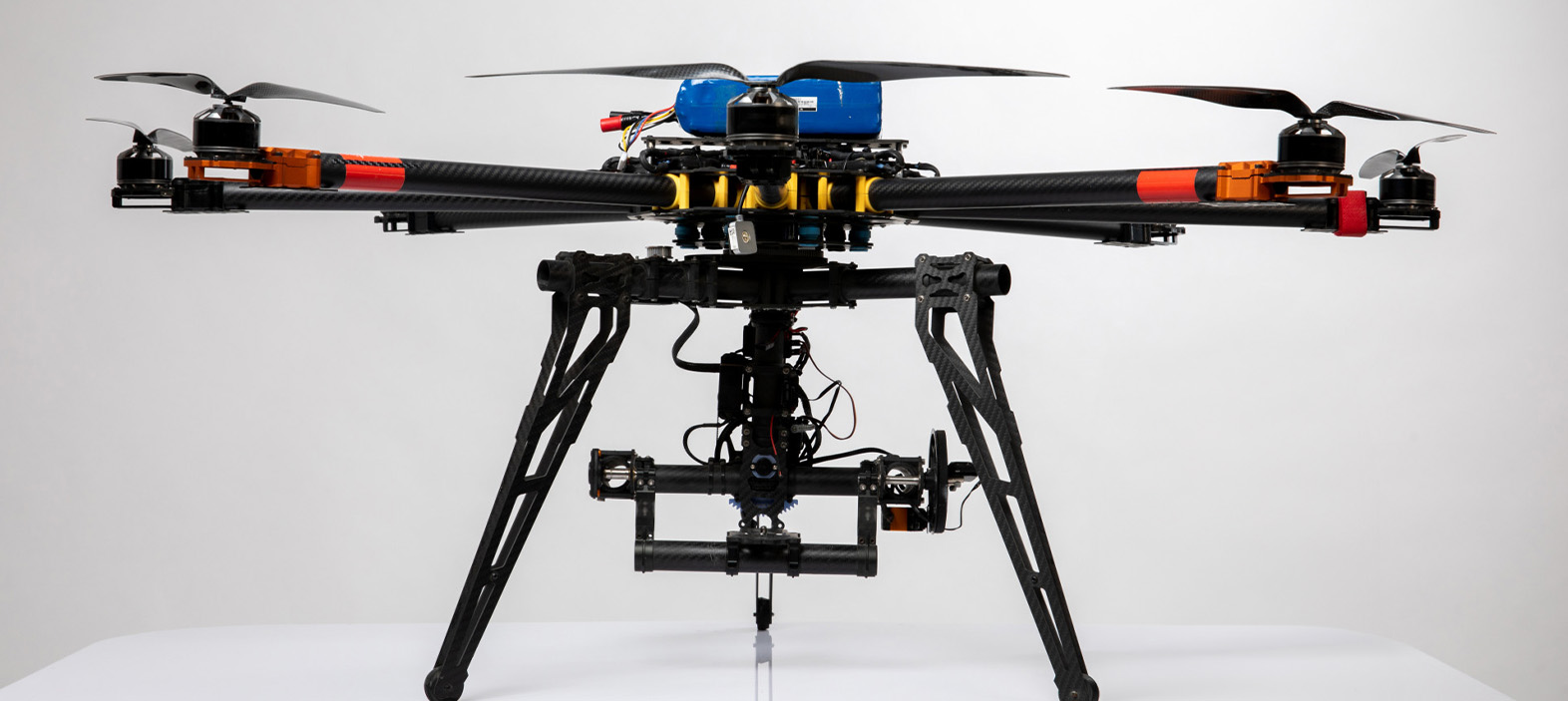
Carbon fiber composites for aerospace applications are almost never off-the-shelf. Aircraft brackets, ducting, and structural panels demand certified layup schedules, traceable material batches, and parts engineered to precise load and fatigue specifications; custom fabrication isn't a preference here; it's a requirement.
Carbon fiber composites for medical devices include imaging equipment components, surgical tool housings, prosthetic frameworks that often need radiolucency, biocompatible finishes, and dimensional tolerances that standard stock can't guarantee. Custom-molded or machined parts ensure consistency across every unit produced.
Carbon fiber composites for structural retrofitting in civil engineering, such as strengthening concrete beams or bridge girders, rely on custom-fabricated strips and plates bonded to match the exact geometry of the structure being reinforced. Standard sheet dimensions rarely align with real-world retrofit conditions, making tailored fabrication the practical choice.
Making the Right Call
If your project is a prototype, a low-stress mechanical assembly, or a budget-conscious build, off-the-shelf carbon fiber rods, tubes, and sheets are a smart, economical starting point. But if you're designing for aerospace, medical, structural, or high-performance UAV applications, where weight, safety margins, and fit tolerances are non-negotiable. Custom-engineered carbon fiber composites and CNC-machined parts deliver the performance and reliability that generic stock simply can't match.
The smartest approach for many teams is hybrid: prototype with standard stock to validate your design, then transition to custom components once performance requirements are locked in. Working with a manufacturer like NitPro Composites that offers both stock inventory and custom fabrication under one roof can make that transition smoother. Either way, understanding what carbon fiber composites can offer and where the line between "good enough" and "engineered for the job" sits will save you time, money, and design headaches down the road.