UAV vs Drone: Understanding the Terminology and Its Role in Component Sourcing
👁 Reads: 16
UAV is the formal engineering term for any aircraft that operates without an onboard pilot. Drone is the everyday word for the same category-it covers everything from a consumer quadcopter to a military-grade reconnaissance platform. Functionally, the two terms refer to the same aircraft, the difference is in context and precision.
With NitPro Composites, learn the terminology to understand in detail to make the right choice when enquiring about carbon fiber composite drone frames for commercial use or industrial UAV frames.
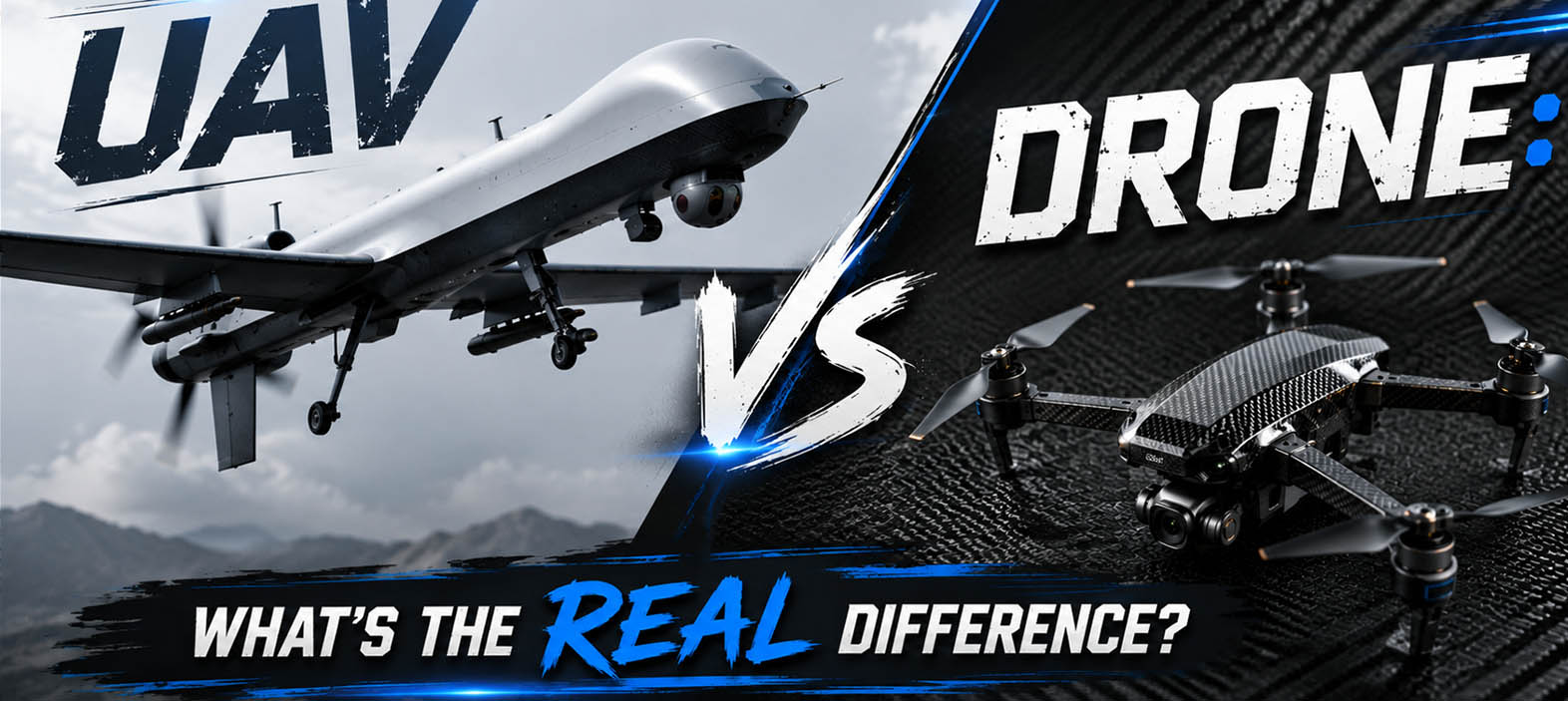
UAV vs Drone: What Is the Real Difference?
Technically, UAV stands for Unmanned Aerial Vehicle, a broad engineering term covering any aircraft that operates without a human pilot on board. Drone is the popular, everyday word for the same category of aircraft, and over time it has expanded to include everything from a child's toy quadcopter to a military-grade reconnaissance platform.
In practice, "UAV" tends to show up in technical, regulatory, and procurement contexts, especially around aerospace and defense. "Drone" dominates consumer and commercial conversation, from aerial photography to crop spraying. The global drone market reflects just how broad this category has become. It was valued at roughly 96.4 billion dollars in 2026. That range spans everything from hobbyist quadcopters to long-range defense systems, which is exactly why terminology matters when you are sourcing parts.
Why the Terminology Affects Component Sourcing
When a customer says "drone parts," they may be picturing a lightweight recreational build. When a customer says "UAV components," they are often describing a platform with tighter tolerances, stricter certification needs, and mission-critical performance requirements.
Understanding this distinction helps manufacturers like NitPro Composites recommend the right material and design approach from the start, whether that means pointing a hobbyist toward our standard carbon fiber prepreg round tubes or steering a defense contractor toward custom-engineered structural components.
This is where carbon fiber composites earn their reputation. Whether the end use is a photography quadcopter or a fixed-wing surveillance platform, the material science questions are the same: how much weight can you remove without sacrificing strength?
Carbon Fiber Components Across the UAV Ecosystem
The terminology debate aside, the components themselves span the full range of drone and UAV applications:
Carbon fiber tubes for drone arms and landing gear provide the structural backbone for multirotor platforms, keeping the frame rigid without adding unnecessary mass. Builders sourcing frame arms often look specifically for a reliable carbon fiber prepreg round tube manufacturer or a carbon fiber square tube manufacturer for structural applications, depending on the geometry their design calls for.
Woven carbon fiber sheets for UAV airframes are used in fuselage panels and mounting plates where flat, load-bearing strength is required. This is where a dependable carbon fiber sheets manufacturer matters, particularly one offering custom cut carbon fiber sheets and twill weave carbon fiber sheets for structural parts, since panel geometry varies widely between multirotor and fixed-wing designs.
Carbon fiber prepreg for drone manufacturing allows for precise resin content control, which is critical for producing consistent, high-performance parts at scale.
Carbon fiber composite propellers for long-range drones reduce rotational mass, improving efficiency on platforms built for extended missions.
Carbon fiber fuselage design for fixed-wing drones supports the aerodynamic and structural demands of long-endurance flight, often relying on carbon fiber laminate sheets for CNC cuttingand high strength carbon fiber laminate for structural parts to build up panel thickness exactly where it's needed.
These are the same building blocks behind the best carbon fiber drones for aerial photography, where stability and vibration control directly affect image quality, and behind durable drone components for agricultural UAVs, where parts need to withstand dust, heat, and repeated field use season after season. Reinforcement elements like carbon fiber solid rods and high tensile strength carbon fiber pultruded rods are frequently used in these builds to stiffen arms and support brackets without adding bulk.
How Carbon Fiber Composites Are Used in Drone Manufacturing
From a manufacturing standpoint, carbon fiber layup techniques for custom drone frames involve stacking woven or unidirectional fiber sheets in specific orientations to align strength with the loads a part will actually experience in flight. Builders working from raw material often start with carbon fiber woven fabric or unidirectional carbon fiber fabric in the appropriate GSM weight before moving to layup, then rely on precision CNC cut carbon fiber components to bring panels and brackets to their final dimensions.
This is combined with carbon fiber composite strength testing for aerospace applications to verify that finished parts meet tolerance and durability standards before they ever reach a customer's build.
The benefits of carbon fiber in unmanned aerial vehicle design go beyond weight savings. Carbon fiber resists corrosion, holds dimensional stability across temperature swings, and does not fatigue the way metal can under repeated vibration. This is a core reason why carbon fiber is preferred over plastic in UAV design for any application beyond basic hobbyist builds. Plastic components are lighter than metal but lack the stiffness and long-term durability that commercial and industrial operators need — which is also why more builders are turning to carbon fiber pultruded profiles and carbon fiber pultruded tubes for structural reinforcement in place of molded plastic brackets and struts.
How to Choose the Right Carbon Fiber for Drone Builds
Not every project needs the same grade of material. Hobbyists building a first quadcopter may prioritize affordable carbon fiber materials for hobbyist drone builds — often starting with off-the-shelf tube and rod stock — while a commercial operator building for aerial mapping or agriculture needs industrial-grade tubes and sheets engineered for repeated stress cycles, and may need custom diameter carbon fiber pultruded rods or application-specific carbon fiber pultruded profile cross-sections designed around their exact frame geometry. Understanding whether your platform falls under the "drone" or "UAV" category, in the practical sense, helps narrow that decision quickly.
Sourcing Carbon Fiber for Your Next Build
Whether you are asking where to buy carbon fiber sheets for drone projects, looking for a custom carbon fiber drone parts manufacturer, or comparing carbon fiber composite suppliers for UAV production, NitPro Composites manufactures rods, sheets, tubes, and machined parts built for the demands of modern aerial platforms. Our catalog spans everything from carbon fiber prepreg square tubes and carbon fiber pultruded rods to custom carbon fiber CNC machining services, so builders can source structural tubing, flat stock, and finished machined brackets from a single supplier. We also support wholesale carbon fiber tubes for drone frames for manufacturers building at scale.
As the industry looks toward the future of carbon fiber materials in UAV technology, lightweight composite materials trends in drone industry 2026 point toward even greater use of advanced prepregs and automated layup processes, pushing performance further while keeping weight down.
Frequently Asked Questions
Q1. Is a UAV the Same Thing as a Drone?
A. Functionally, yes. UAV is the formal engineering term for any unmanned aircraft, while "drone" is the everyday term for the same type of aircraft. UAV is more commonly used in technical, defense, and regulatory contexts, while drone is used more broadly across consumer, commercial, and industrial applications, including aerial photography and agriculture.
Q2. Why Is Carbon Fiber Preferred Over Aluminum for Drone Frames?
A. Carbon fiber offers a higher strength-to-weight ratio than aluminum, along with excellent vibration dampening and fatigue resistance. This can contribute to longer flight times, more stable footage, and frames that withstand repeated flight cycles, particularly in commercial and industrial UAV applications.
Q3. What Carbon Fiber Components Does NitPro Composites Manufacture for Drones?
A. NitPro Composites produces carbon fiber rods, tubes, sheets, and machined parts used in drone arms, landing gear, airframes, and structural mounts. These components support commercial, agricultural, and defense-grade UAV platforms that require consistent strength and dimensional accuracy.
Q4. How Do I Choose the Right Carbon Fiber Grade for My Drone Build?
A. The right carbon fiber grade depends on your application and performance requirements. Hobbyist builds can often use standard woven sheets and tubes, while commercial and defense platforms may require aerospace-grade prepreg materials that have been tested for strength, durability, and fatigue resistance under repeated stress.