
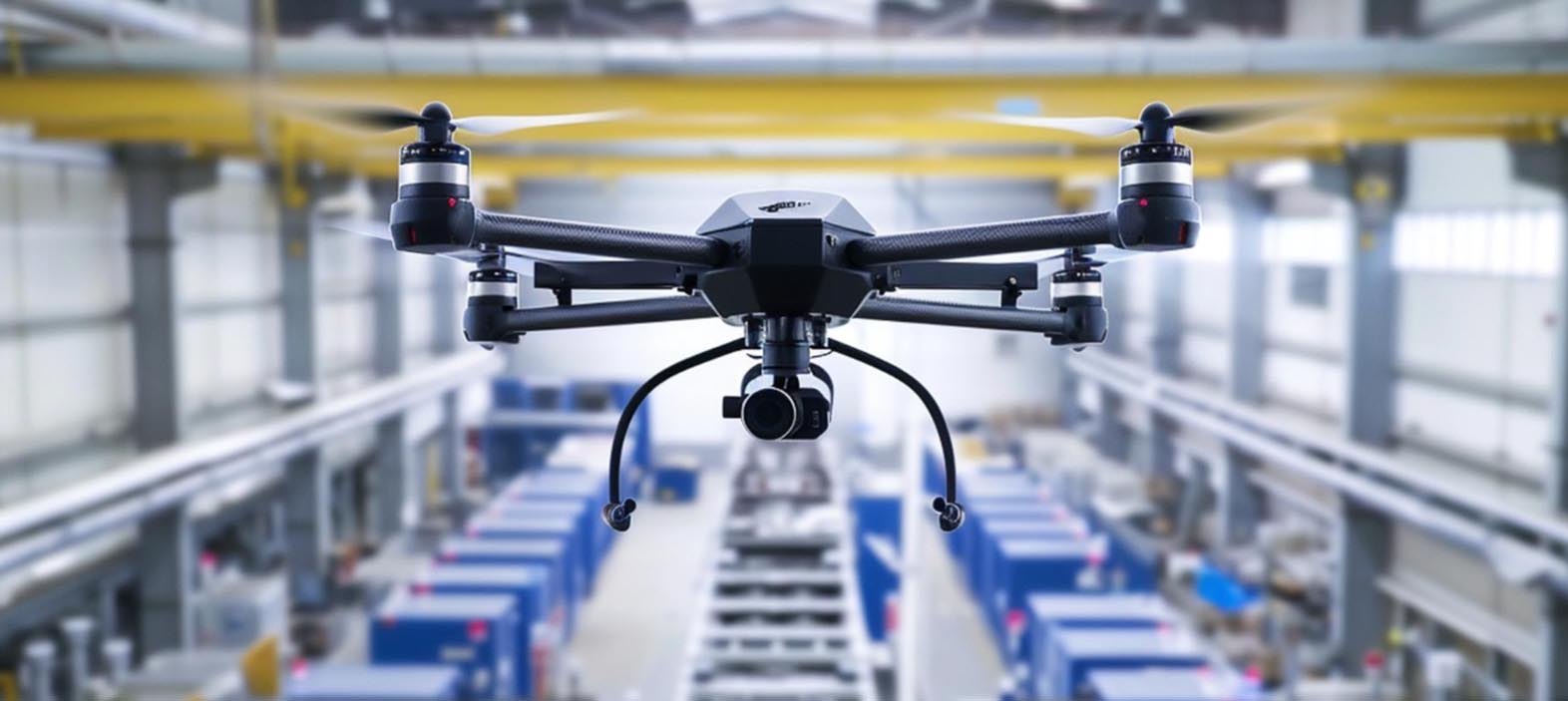
Weight is a very important consideration in drone design. Every gram taken off a drone frame might translate to longer flight time, better agility, and more room for payload. This is why companies in the drone manufacturing business are anxiously looking for lightweight drone frame materials to gain an edge in the market. With all the materials available nowadays, there is one material that consistently tops the list: carbon fiber tubes for drones.
Because of its greater strength-to-weight ratio, carbon fiber structural tubing allows makers to construct lighter, more rigid, and more effective frames than those made from traditional materials like aluminum or fiberglass. In this article, we cover why carbon fiber matters in drone design, how it’s being integrated, real-world results, and why NitPro Carbon Fiber Tubes are a top choice.
Why Carbon Fiber Matters in Drone Design
Carbon fiber is renowned for its incredible combination of strength and weight. It can reduce structural weight by up to 25–40% over aluminum and other metals, and that directly boosts maneuverability and flight time. That kind of edge isn’t just welcome—it’s critical for competitive applications.
The benefits don’t stop with weight loss. Carbon fiber’s built-in stiffness improves stability, and this translates to more even control in flight and more accurate readings from onboard sensors. Its built-in vibration resistance also protects sensitive electronics and cameras from excessive stress. And where durability is concerned, carbon fiber really does well under environmental stress—UV, heat, humidity, and corrosion.
In short, carbon fiber is not just a lightweight drone frame material; it’s a performance improvement tool.
Integrating Carbon Fiber Tubes in Drone Design
The integration of carbon fiber structural tubing into a drone frame starts with smart design. Engineers often use CAD software and topology optimization software to identify where carbon fiber tubes can replace heavier materials without impact on strength or structural integrity.
Once the layout is determined, carbon fiber tubes are precision-cut to length and then bonded together using high-strength epoxy adhesives. Where required, custom connectors or clamps can be used to hold parts in place. Hybrid frames are also made by certain manufacturers by combining 3D‑printed connectors with carbon tubes to create structures that are strong, modular, and easy to assemble.
One of the most significant design methods is fiber direction: ensuring that the orientation of fibers is in directions of maximum stress. This maximizes stiffness for minimal unwanted weight. The finished frame is frequently completed by sanding, sealing, or heat-shrink wrapping for durability and aesthetics.
Gains in Performance due to Weight Reduction
The performance impact from these weight-saving techniques in drones is astounding. Here is what manufacturers constantly observe:
- Longer flight time: Reducing the frame weight by 25–40% can extend battery life by 20–30%.
- Increased payload capacity: Lighter structural mass allows for heavier cameras, sensors, or payloads.
- Improved, easier mobility: Less-inertia drones accelerate, brake, and respond more effectively.
- Increased power efficiency: Less energy is required for lift and extended flight time.
Simply put, carbon fiber tubes do more than reduce the weight of drones—they make them better in every way that counts.
Drone Types Benefiting Most from Carbon Fiber Tubes
Not all drones benefit equally from carbon fiber tubes, but some types benefit most particularly:
- Racing and FPV drones: Their speed, agility, and crash resistance are in high demand; carbon fiber frames are now the standard.
- Industrial drones: Used for agriculture, construction, and inspection, these drones need long flight times and robust, lightweight structures.
- Commercial delivery drone: Any weight reduction on the drone structure is more payload.
- Defense and aerospace UAVs: Such high-performance uses require aerospace carbon fiber tubes for mission-critical performance.
Carbon fiber tubes in drones enable manufacturers to significantly enhance efficiency across all these markets.
Innovation & Research Trends in Drone Design
Drone materials are rapidly changing, and carbon fiber technology is leading the way. Developing trends are:
- 3D-printed composite structures: Research indicates that it is possible to print drones using continuous carbon fiber reinforcement to cut weight by more than 40% and increase stiffness.
- Recycled carbon fiber: With sustainability on the radar, researchers cite recycled carbon fiber as a material option for environmentally friendly drone structures.
- Smart composites: Carbon fiber structures are now being infused with sensors or smart resins that can track fatigue, vibration, or temperature in real-time.
- Hybrid structures: Coupling carbon fiber tubes with aluminum or titanium connectors offers strength, light weighting, and cost-effectiveness in combination.
Real-World Case Study: Drone with Continuous Fiber Reinforcement
A notable drone carbon fiber case study comes from a manufacturer that used continuous fiber paths to 3D-print a carbon fiber-reinforced drone frame. Here’s the result:
| Metric | Old Frame |
New Frame (CF Reinforced) |
Weight (g) |
32 |
18 |
Stiffness (Hz) |
172 |
200.3 |
Cost (USD) |
60 |
31 |
That’s a 43% weight reduction, 48% cost savings, and a 16% increase in stiffness—a powerful example of how drone weight reduction techniques using carbon fiber can dramatically improve performance.
Why NitPro Carbon Fiber Tubes Matter
While the above example wasn’t using NitPro Carbon Fiber Tubes, it is an excellent representation of exactly the kind of enhancement that NitPro products are designed to deliver.
NitPro Carbon Fiber Tubes are manufactured for precision, high-performance applications. They offer:
- Aerospace-grade strength and stiffness
- Custom sizing for your specific drone design
- Excellent vibration resistance and fatigue life
- Compatibility with common finishing and bonding techniques
From FPV racers to commercial workhorses, NitPro’s carbon fiber structural tubing enables you to integrate weight-saving, performance-boosting materials into your drone project without compromise.
With NitPro tubes in your design arsenal, you can experience the same kinds of advantages — lighter frames, extended flight times, and increased durability.
Final Words
Carbon fiber tubes for drones are revolutionizing the UAV design strategy for manufacturers. With lighter frame weight and higher efficiency, through newly facilitated flight capabilities to simply improved performance, carbon fiber structural tubing provides measurable performance benefits across drone application types and industries.
As the market continues to evolve, the appropriate material will be key to remaining ahead. With NitPro Carbon Fiber Tubes, drone manufacturers can leverage advanced materials created for exceptional performance, putting them in closer reach of developing lighter, smarter, and more potent aerial systems.
If you care about maximizing your drone design, the time to transition into carbon fiber is now.
1 thought on “How a Drone Manufacturer Can Cut Weight by 40% Using NitPro Carbon Fiber Tubes”
Comments are closed.